Even after the appointment ends, patient care doesn’t. Messages, follow-ups, and urgent calls often spill into nights, weekends, and vacations — a reality most physicians know all too well.
To better understand how doctors are managing communication beyond the clinic, Sermo surveyed more than 100 physicians across specialties. The results reveal a common theme: while technology has opened more ways to stay in touch, it hasn’t necessarily made staying connected easier.
Too many tools, too many missed messages
Nearly every physician surveyed (92%) uses an EHR or patient portal to message patients outside the office. Yet old-fashioned phone calls (80%) and on-call services (61%) are critical to day-to-day outreach.

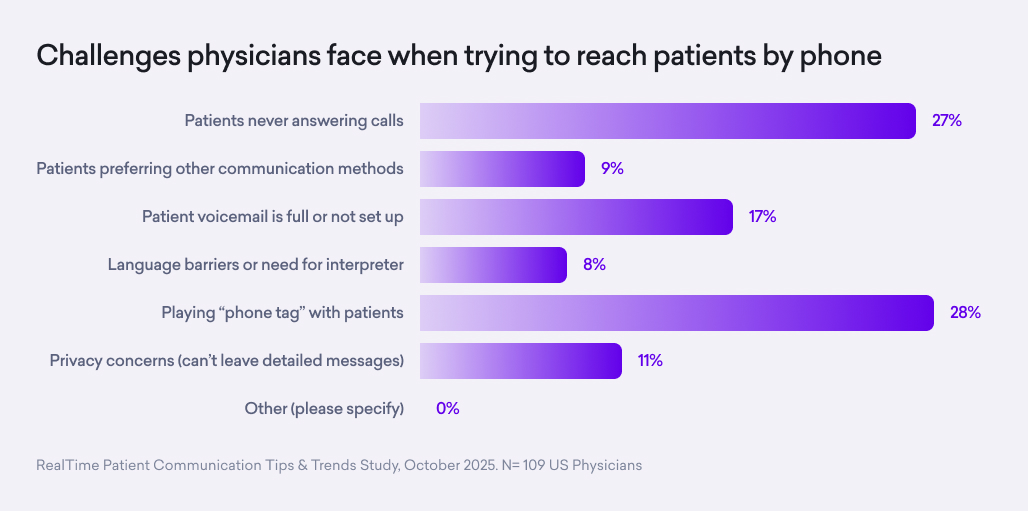
And those calls? They’re not going smoothly. Nine in ten (96%) physicians say they always, often, or sometimes find themselves in endless games of phone tag, 27% say patients simply don’t answer, and 17% report that patient voicemails are full, often with spam calls filling up inboxes before important messages can get through.
It’s not just inconvenient, it’s inefficient. A third of physicians report wasted staff time, and one in four say missed communication has directly led to delayed or missed care. For many physicians, this constant back-and-forth adds up to more than just lost time — it erodes work-life balance and contributes to burnout. What started as a few quick follow-up calls has become a near-constant connection loop.

Privacy vs. accessibility: the modern trade-off
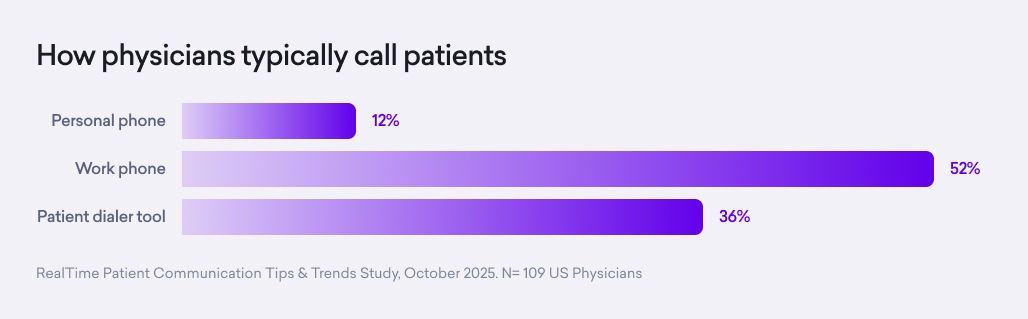
When it comes to patient calls, most physicians still rely on work phones (52%) or patient dialer tools (36%), while only 12% use their personal phones — reflecting a clear desire to maintain professional boundaries.
That aligns with another finding: 59% of physicians say they never share their personal phone numbers with patients. Even so, staying accessible remains a challenge, especially when traveling — 31% of doctors report being unable to communicate effectively with patients abroad, citing technology and connectivity barriers.
Physicians want to be reachable, but not always on. The data makes it clear: modern medicine demands flexible communication but not at the expense of personal time or privacy.
Finding balance: smarter ways to stay in touch
The takeaway? There’s no single perfect tool for patient communication but there is a smarter, more secure way to simplify outreach and boost patient responsiveness.
Patients are often absorbing a significant amount of clinical and logistical information all at once during appointments, especially their first one. To support a smoother experience, particularly for patients managing chronic conditions who you’re likely to engage with often, it can be valuable to spend the last few minutes of a visit reviewing how to contact your team outside of the practice. A simple handout outlining communication expectations can go a long way in reducing confusion, setting realistic timelines, and saving time for your staff down the line.
That handout might include:
- Typical response times for portal messages or calls
- What happens when calling after hours
- A reminder that “no news is good news” — you’ll reach out only with abnormal results — and that all results, normal and abnormal, are available in the patient portal
- Clear instructions on what to do in case of an emergency, including a specific hospital address and a 24/7 contact number if relevant to your specialty
For many physicians, the challenge isn’t just setting expectations, it’s finding the right way to manage communication efficiently and securely once those expectations are in place. That’s where Sermo Mobile helps.
Built for physicians on the go, free dialer tools like Sermo Mobile enable secure, unlimited patient calls from any device without ever revealing your personal number. Patients see your office or clinic’s caller ID, not your cell, which helps boost answer rates while protecting your privacy. Even better, it works seamlessly across borders, keeping you connected wherever care takes you.
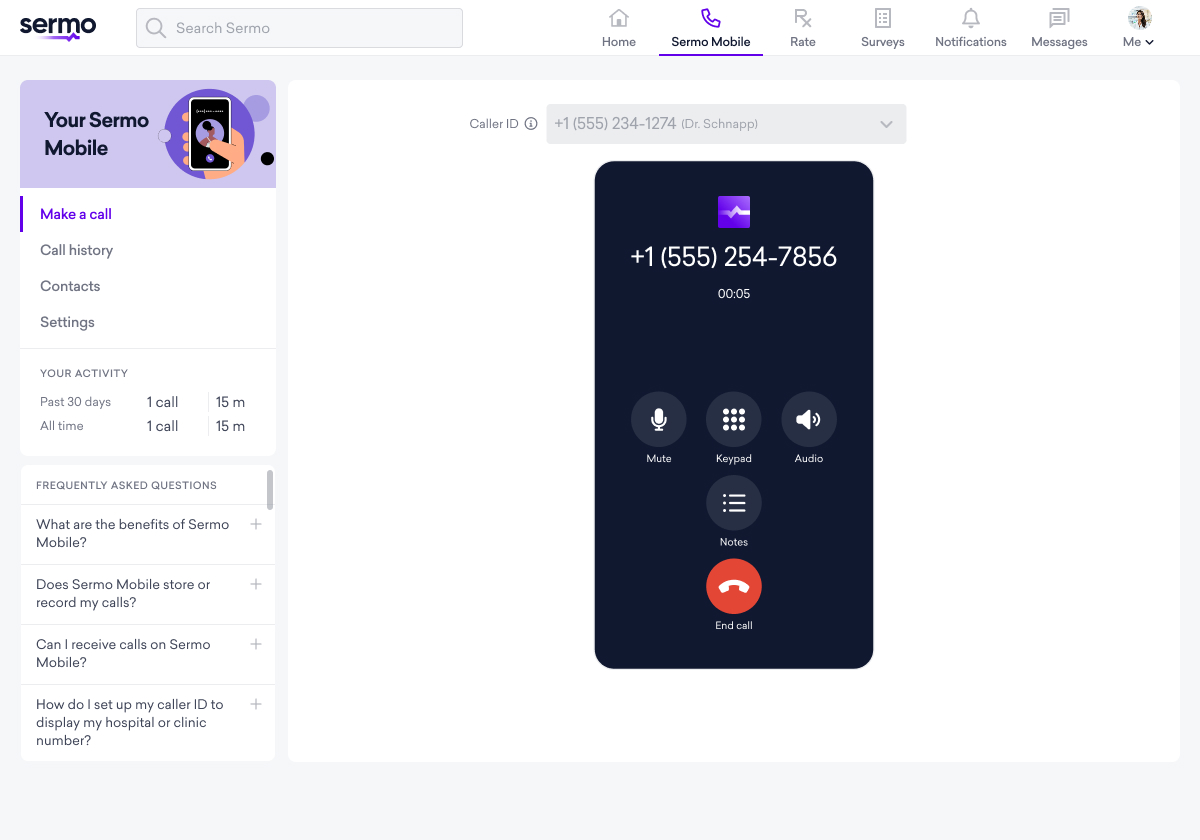
With Sermo Mobile, you can:
- Protect your privacy: keep your personal number private while displaying a professional, recognizable caller ID that patients trust.
- Build a patient contact list: save and organize the patients you reach out to regularly, making follow-ups faster and easier.
- Take quick call notes: jot down reminders or next steps immediately after conversations. Notes are stored securely for up to eight days, then automatically deleted to maintain privacy compliance.
- Stay connected anywhere: make secure, compliant calls from your mobile device or desktop whether you’re at the clinic, on rounds, or traveling.
- Skip the clutter: because Sermo Mobile is integrated directly into the Sermo community, there’s no need for separate apps or downloads. Everything you need lives in one place.
- Enjoy it free as a member: unlimited domestic calls are included with your Sermo membership — no extra fees or plans required.
No extra apps. No blurred boundaries. Just a seamless way to reach patients when you need to, and disconnect when you don’t. Learn more about Sermo Mobile