New Sermo survey finds physicians support AI’s potential but say stronger oversight, clearer accountability, and physician leadership are essential for its future in healthcare.
When ChatGPT first entered the public consciousness, it answered trivia questions, drafted emails, and planned vacations. Today, it is helping people interpret symptoms, evaluate medications, and decide whether they need to see a doctor.
That evolution has happened at remarkable speed. The guardrails around it have not.
A recent lawsuit alleging that AI-generated medical advice contributed to a patient’s death has once again raised difficult questions about accountability, oversight, and patient safety. While the courts will ultimately decide the specifics of that case, it reflects a much broader issue unfolding in exam rooms every day. Patients are increasingly arriving with AI-generated health advice, while physicians are navigating a healthcare system that is still determining how these technologies should be regulated, integrated, and governed.
To better understand how physicians view AI’s rapidly expanding role in healthcare, Sermo surveyed practicing clinicians across specialties. The results reveal a profession that is neither fearful nor dismissive of artificial intelligence. Instead, physicians see enormous potential for AI to improve healthcare, provided it is deployed thoughtfully, transparently, and always under human oversight.
Physicians see the promise. They also see the gaps.
Artificial intelligence has become one of the fastest-moving technologies healthcare has ever encountered. Clinical guidance, however, has struggled to keep pace. That disconnect is reflected throughout the survey. Nearly every physician surveyed believes the healthcare system is falling behind.
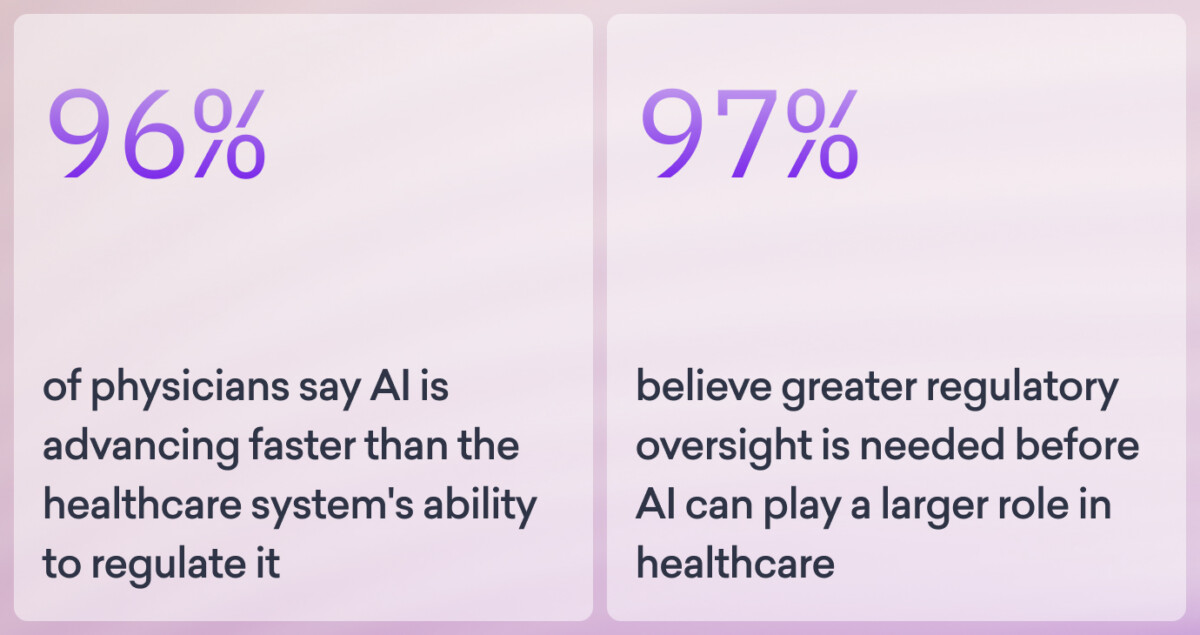
Those findings suggest the conversation has moved well beyond whether AI belongs in healthcare. Physicians increasingly accept that it does. Their concern is whether the safeguards surrounding AI are evolving quickly enough to protect patients and support clinicians.
Physicians want AI beside them, not instead of them
One of the clearest findings from the survey is that physicians are embracing AI as an assistant, not an autonomous decision-maker.
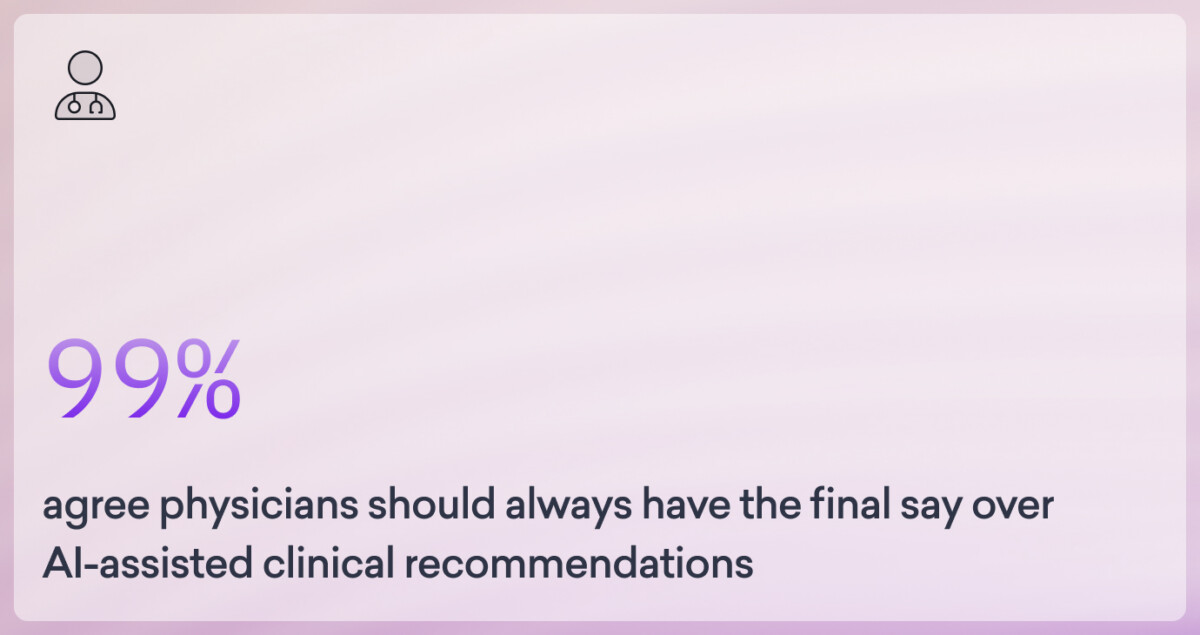
Nearly every physician (99%) agrees physicians should retain final authority over AI-assisted clinical recommendations, while 76% say AI’s role should be to support, not replace, physicians in clinical decision-making.
Similarly, when asked whether AI-generated medical recommendations should ever be presented directly to patients without physician review, only 9% said yes in most situations. Forty-two percent believe physician review should always be required, while another 49% would limit direct AI recommendations to only low-risk or very specific circumstances.
That preference carries into how physicians think AI should be governed: when asked to name the single most important safeguard before AI recommendations are used in patient care, a majority (53%) chose mandatory physician review before recommendations are acted upon — more than any other safeguard, and more than regulatory oversight (20%) and AI disclosure (18%) combined.
Taken together, the findings paint a clear picture. Physicians are not asking healthcare to slow AI down. They are asking that human clinical judgment remain at the center of patient care.
The biggest opportunity is not diagnosis. It’s reducing the burden of practicing medicine.
While public attention often focuses on AI diagnosing disease, physicians see its greatest opportunity elsewhere. More than 9 in 10 (92%) agree AI’s greatest value lies in reducing administrative burden rather than making clinical decisions.
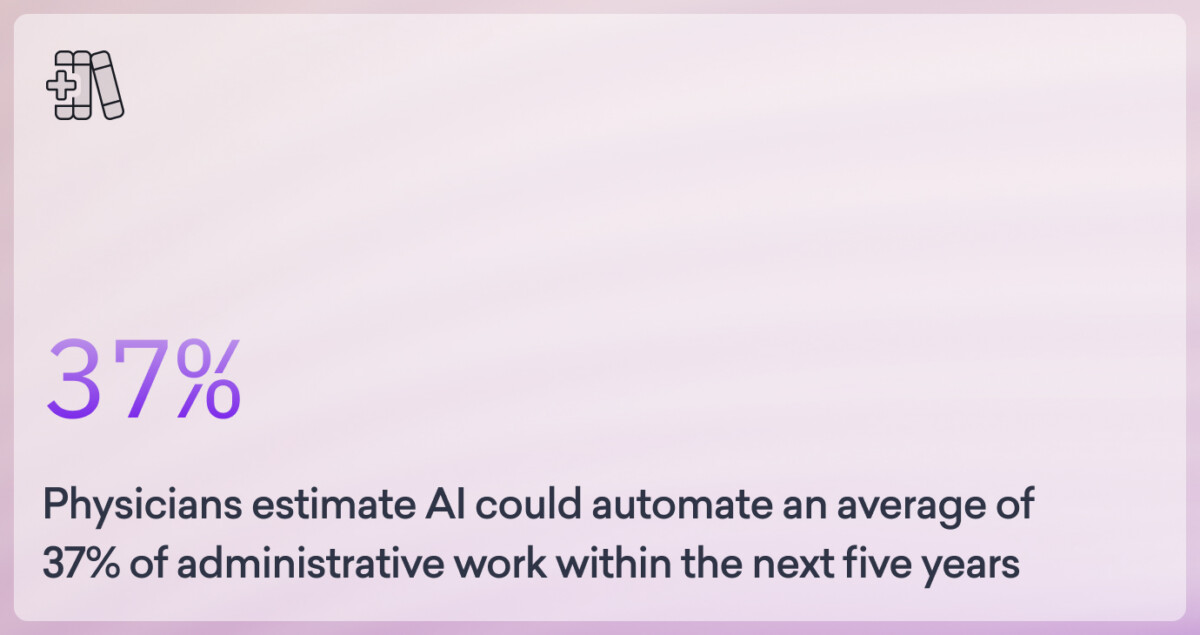
Documentation, paperwork, prior authorizations, inbox management, and other administrative tasks continue to consume valuable physician time. Respondents estimate AI could realistically automate an average of 37% of that workload within the next five years.
That is where physicians believe AI can deliver immediate value. By handling repetitive operational work, AI has the potential to give clinicians back something that has become increasingly scarce: more time with patients.
Patients are already changing their behavior
Whether healthcare is ready or not, patients have already incorporated AI into their healthcare journey. 8 in 10 physicians report patients are bringing AI-generated health information into appointments more often than they were just one year ago. Nearly one-third say the increase has been significant.
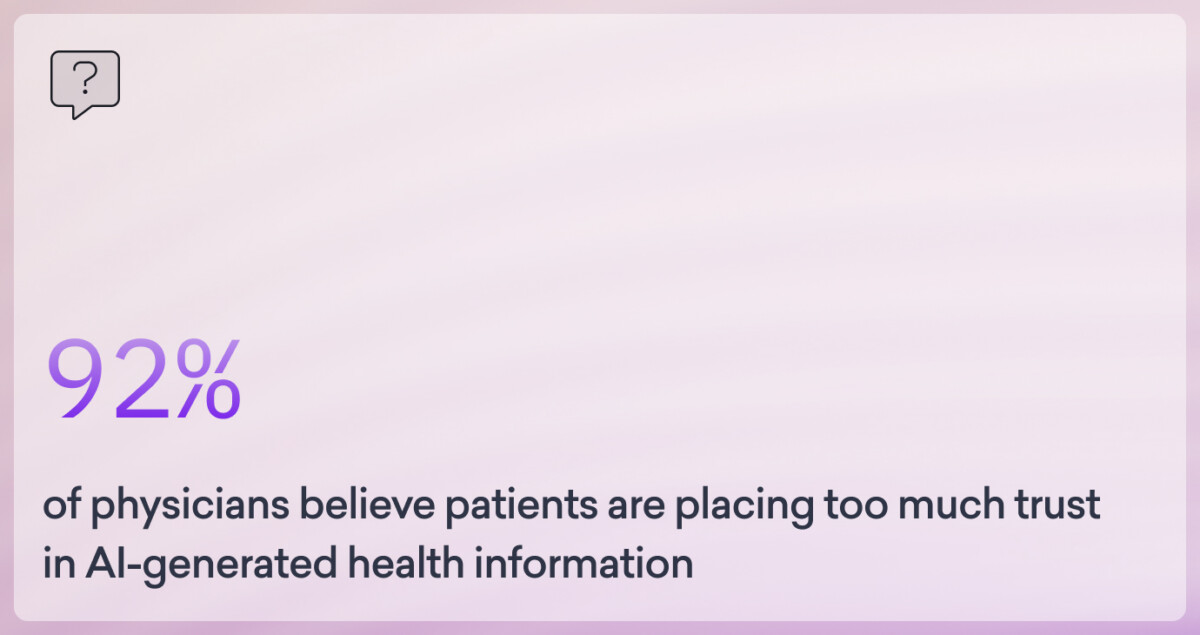
That trend introduces a new challenge for physicians. They are no longer simply interpreting symptoms or discussing treatment options. They are also helping patients evaluate the quality, accuracy, and limitations of information generated by AI. It is perhaps unsurprising, then, that 92% of physicians believe patients are placing too much trust in AI-generated health information.
The technology may be evolving quickly, but physicians remain acutely aware that AI cannot account for the full clinical picture, patient history, physical examination, or the nuance that informs medical decision-making.
Accountability remains healthcare’s unanswered question
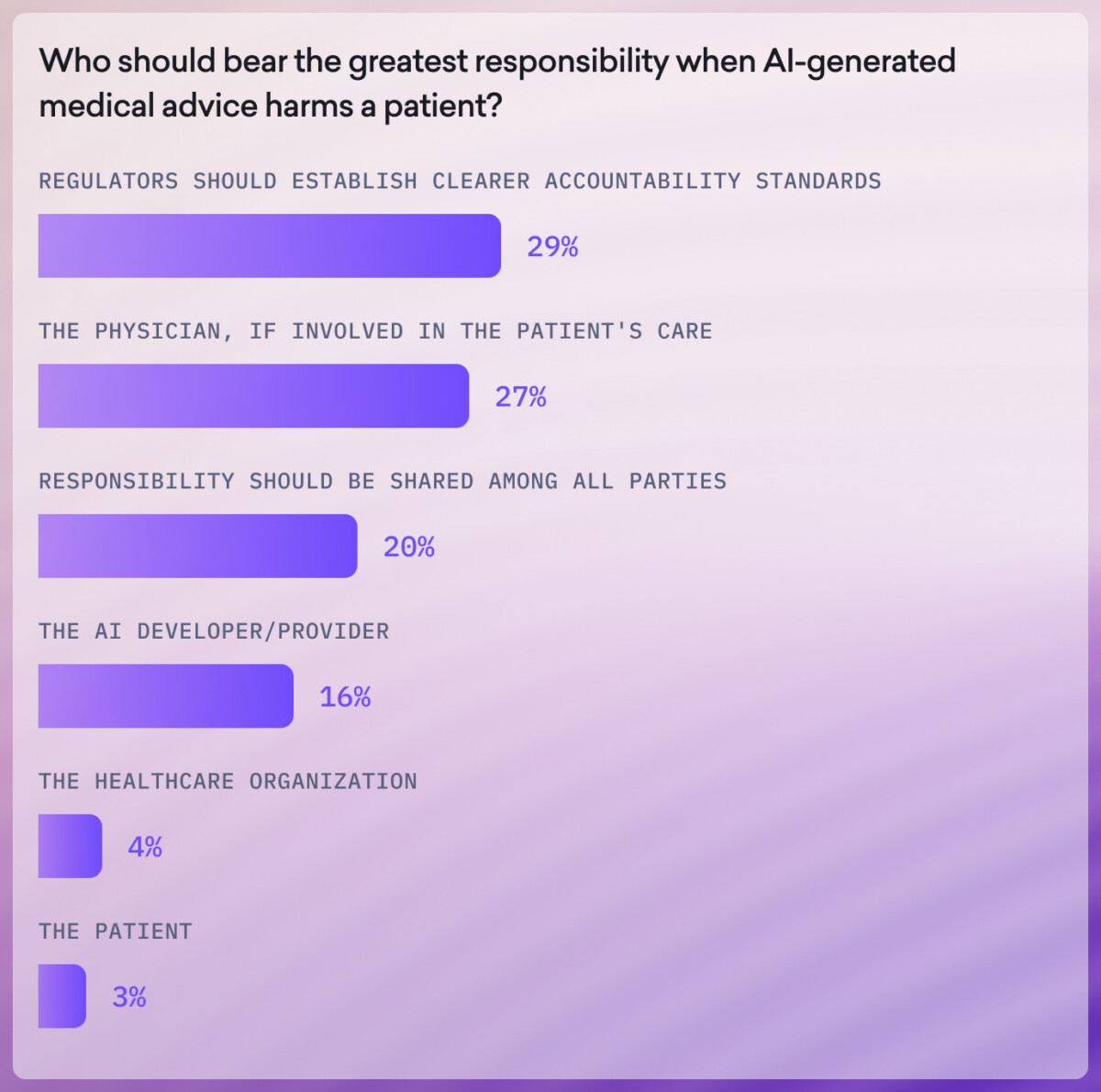
If AI contributes to patient harm, who is ultimately responsible?
The survey reveals there is no clear consensus. Some physicians believe responsibility should rest primarily with regulators. Others point to physicians, AI developers, healthcare organizations, or shared accountability across all parties.
That lack of agreement may be one of the survey’s most important findings. AI adoption is accelerating, yet the legal and ethical framework surrounding accountability remains unsettled. Even so, physicians agree on one point. Nearly 89% believe AI developers should share responsibility when patients are harmed after following AI-generated medical advice.
As AI becomes more deeply embedded across healthcare, defining those responsibilities will become increasingly important for developers, providers, regulators, and patients alike.
AI’s future in healthcare depends on trust
The findings reveal a profession that is optimistic without being naïve. Physicians recognize AI’s potential to improve efficiency, reduce administrative burden, and support better clinical decision-making. They are not advocating for less innovation. They are asking for responsible innovation.
The recent headlines surrounding AI may spark public debate, but physicians are focused on a more practical question. How do we ensure AI improves healthcare without compromising the trust that sits at the heart of every patient relationship?
The answer, according to physicians, begins with stronger oversight, clearer accountability, and an unwavering commitment to keeping licensed healthcare professionals at the center of every clinical decision.
Methodology: Sermo fielded this pulse survey of 116 U.S.-based clinicians on July 30, 2026, collecting all responses within a five-hour window through its RealTime on-demand insight platform. Respondents spanned seven provider groups: cardiologists, endocrinologists, internal medicine physicians, nurse practitioners, oncologists, pediatricians, and physician assistants.