By the time many patients walk into the exam room, the conversation has already started.
They’ve searched their symptoms online, watched TikTok videos, listened to health influencers, joined online communities, and increasingly, asked AI tools like ChatGPT for advice. In some cases, they’ve already formed opinions about their diagnosis, questioned a treatment recommendation, or decided what medication they want before speaking with a physician.
This is the new patient journey.
For physicians, it represents a fundamental shift. Patient appointments are no longer just about diagnosis and treatment. They’re increasingly about separating fact from fiction before meaningful care can begin.
To better understand how these changes are affecting clinical practice, Sermo surveyed 526 physicians around the world. The findings reveal that misinformation is no longer an occasional challenge. It’s becoming a routine part of patient care, influencing everything from appointment length to treatment decisions and patient outcomes.
The exam room has become healthcare’s fact-checking center
The rise of AI and social media isn’t happening outside healthcare anymore. It’s happening inside the exam room.
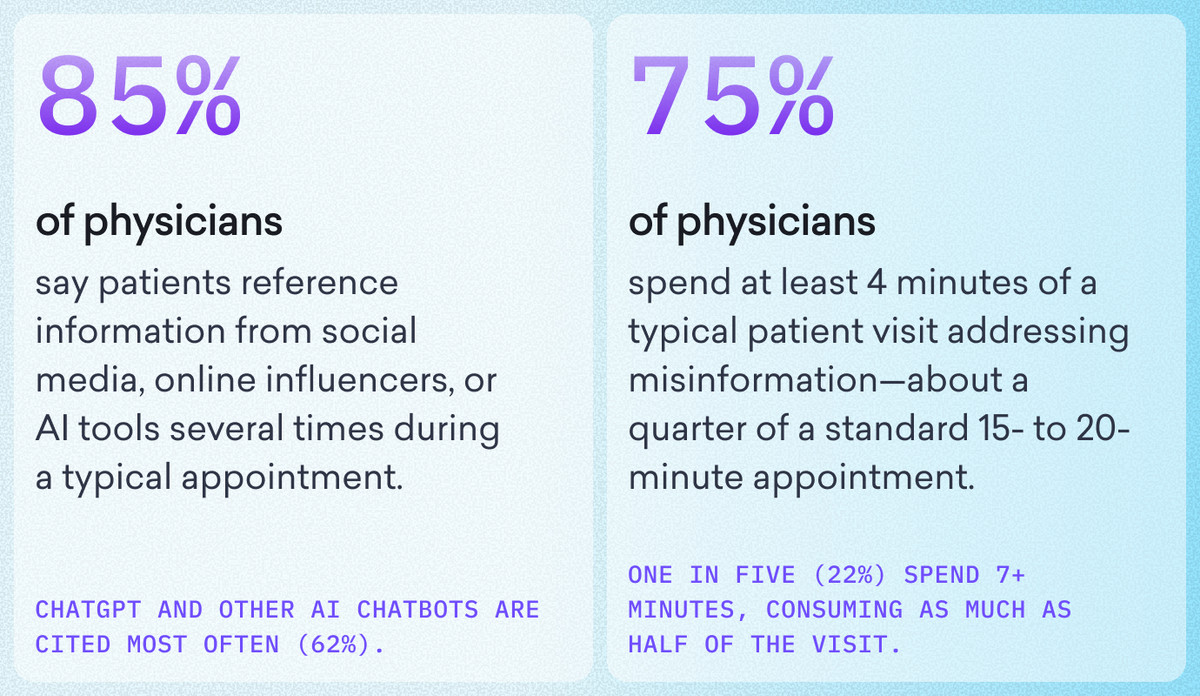
Nearly 85% of physicians say patients reference information from social media, online influencers, or AI tools several or multiple times during a typical appointment. Among those sources, ChatGPT and other AI chatbots are cited most often (62%), highlighting how quickly generative AI has become part of healthcare decision-making.
The result is a growing burden on physicians.
Nearly three-quarters (75%) spend at least four minutes of every patient appointment addressing misinformation, including 22% who spend seven minutes or more. For many physicians, that’s nearly half of a standard office visit spent correcting misconceptions before discussing diagnosis, treatment, or next steps.
And the trend shows no signs of slowing. Nearly all physicians (97%) say the amount of time they spend addressing misinformation from social media, influencers, and AI-generated health content has increased over the past three years, with more than half (53%) saying it has increased significantly.
Not all therapeutic areas are affected equally
While misinformation spans virtually every area of medicine, physicians report that some therapeutic areas are particularly vulnerable.
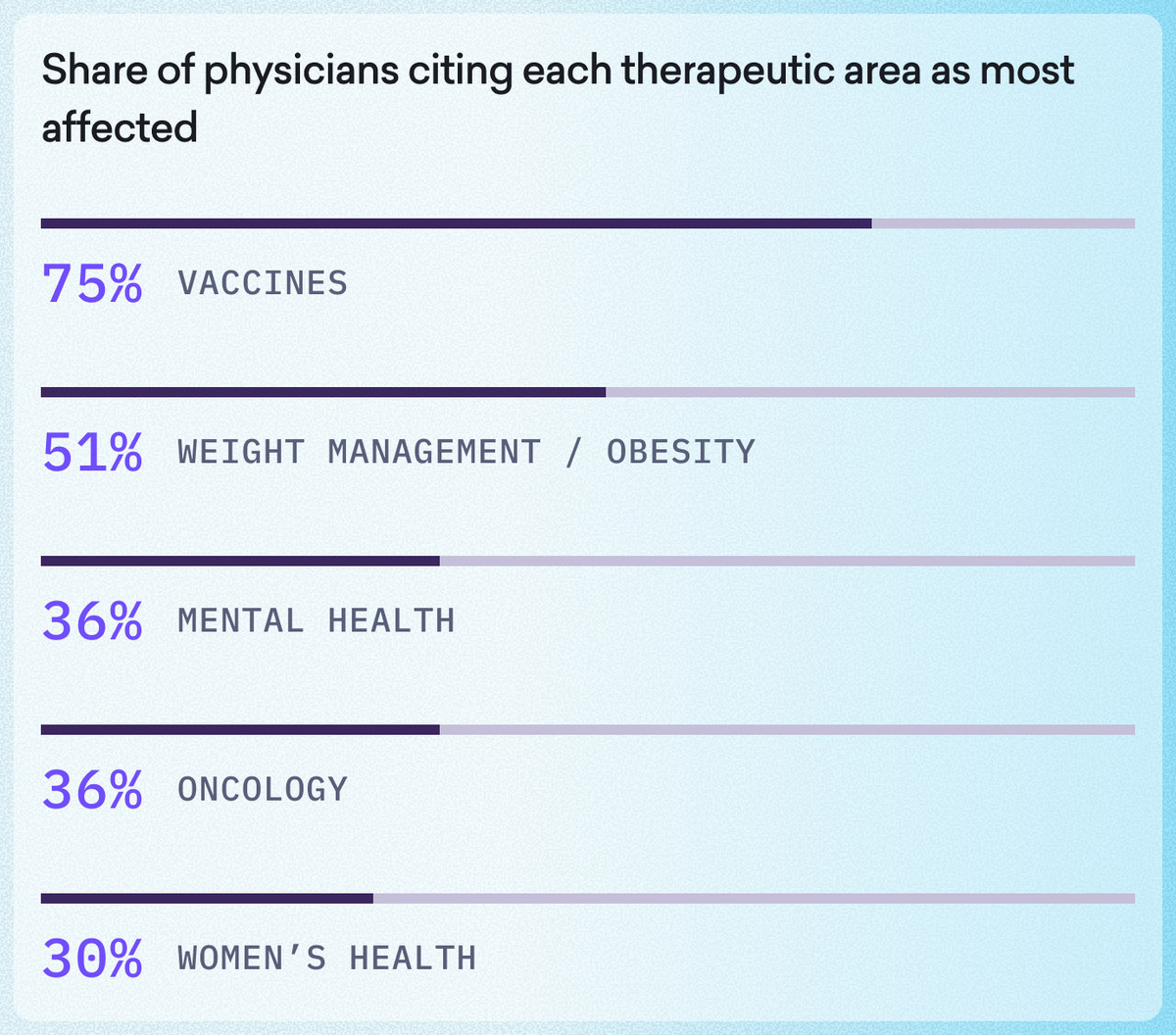
Vaccines top the list, with 75% of physicians identifying them as the area most affected by misinformation, followed by weight management and obesity (51%), mental health (36%), and oncology (36%).
These are among today’s most visible healthcare conversations, where social media algorithms, influencer content, and AI-generated responses can quickly amplify misinformation, often reaching patients before credible medical information does.
Misinformation is influencing care—not just conversation
Longer appointments are only part of the story.
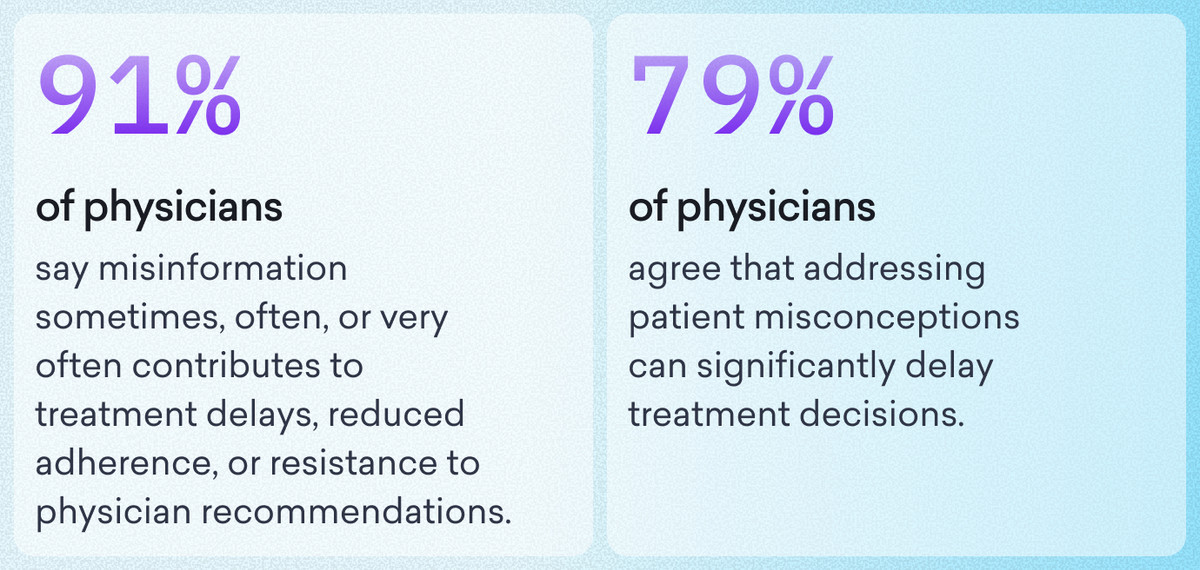
An overwhelming 91% of physicians say misinformation sometimes, often, or very often contributes to treatment delays, reduced adherence, or resistance to physician recommendations. Nearly eight in ten (79%) agree that correcting misconceptions can significantly delay treatment decisions.
The downstream effects extend even further. Physicians report seeing requests for inappropriate therapies (70%), unnecessary testing (62%), increased patient anxiety (58%), delayed treatment decisions (56%), reduced trust in medical advice (55%), and refusal of recommended treatment (55%).
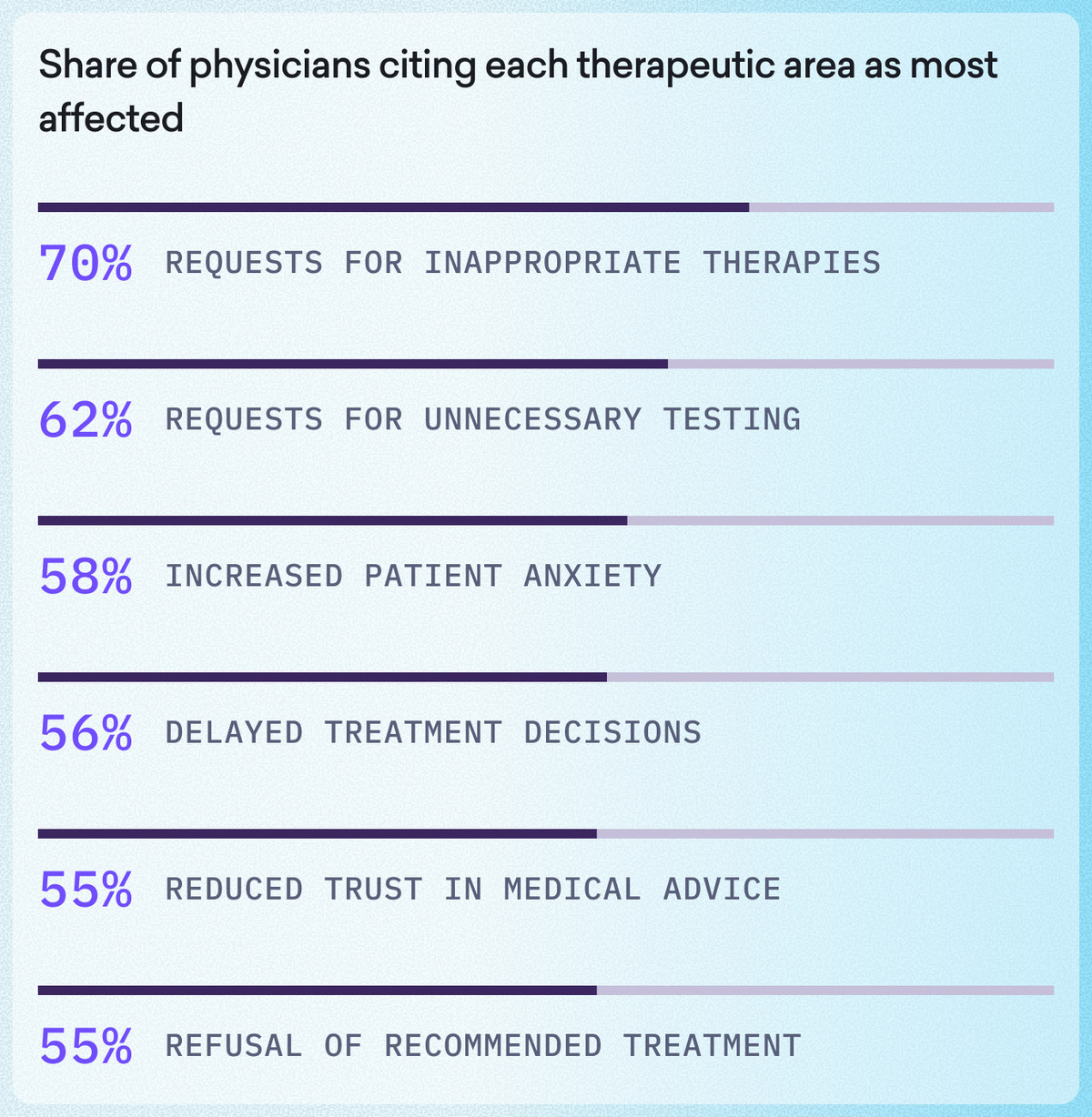
Taken together, these findings suggest misinformation isn’t simply creating longer conversations. It’s creating friction throughout the entire care journey.
It’s also taking a toll on healthcare delivery itself. Nearly 79% of physicians agree that the time spent correcting misinformation places a meaningful strain on patient care and the healthcare system overall.
Physicians need better tools
If misinformation is becoming part of routine care, physicians need resources that help them address it efficiently. Yet today’s tools often fall short.
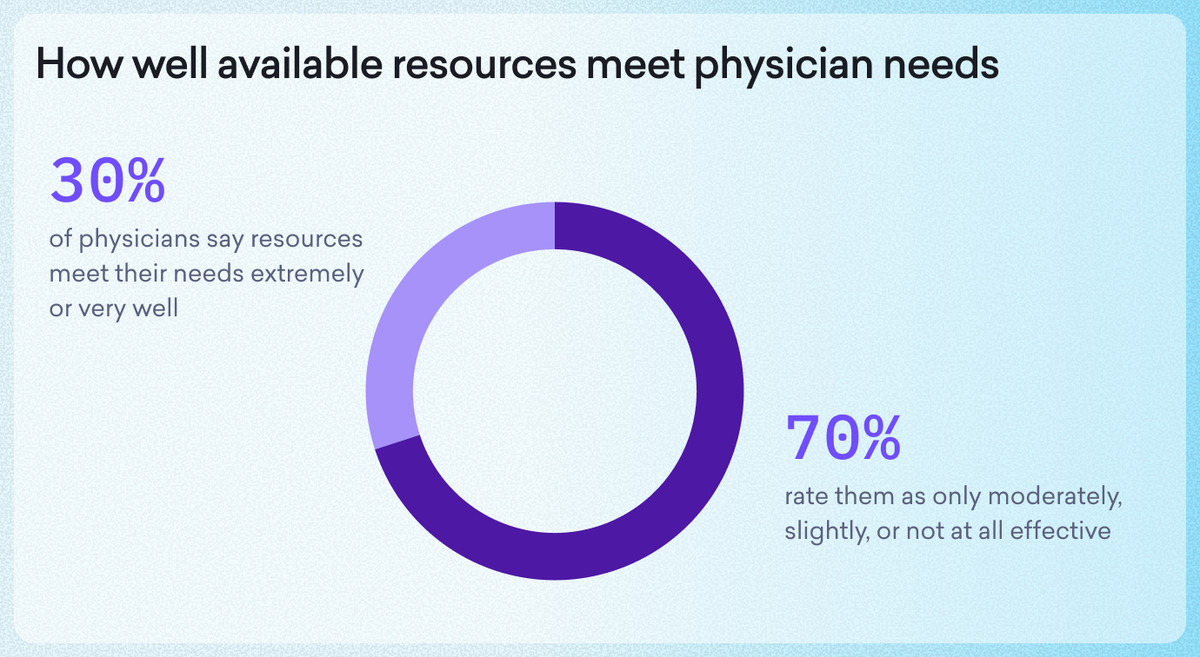
Only 30% of physicians say current patient education resources meet their needs extremely or very well. The remaining 70% rate them as only moderately effective or worse.
That gap represents a significant opportunity for pharmaceutical companies.
When asked what would be most helpful, physicians pointed to practical, evidence-based resources that support real patient conversations, including patient-friendly education materials, disease-specific myth-versus-fact resources, treatment explainers, FAQs that address common misconceptions, and guidance that helps patients distinguish credible health information from misinformation.
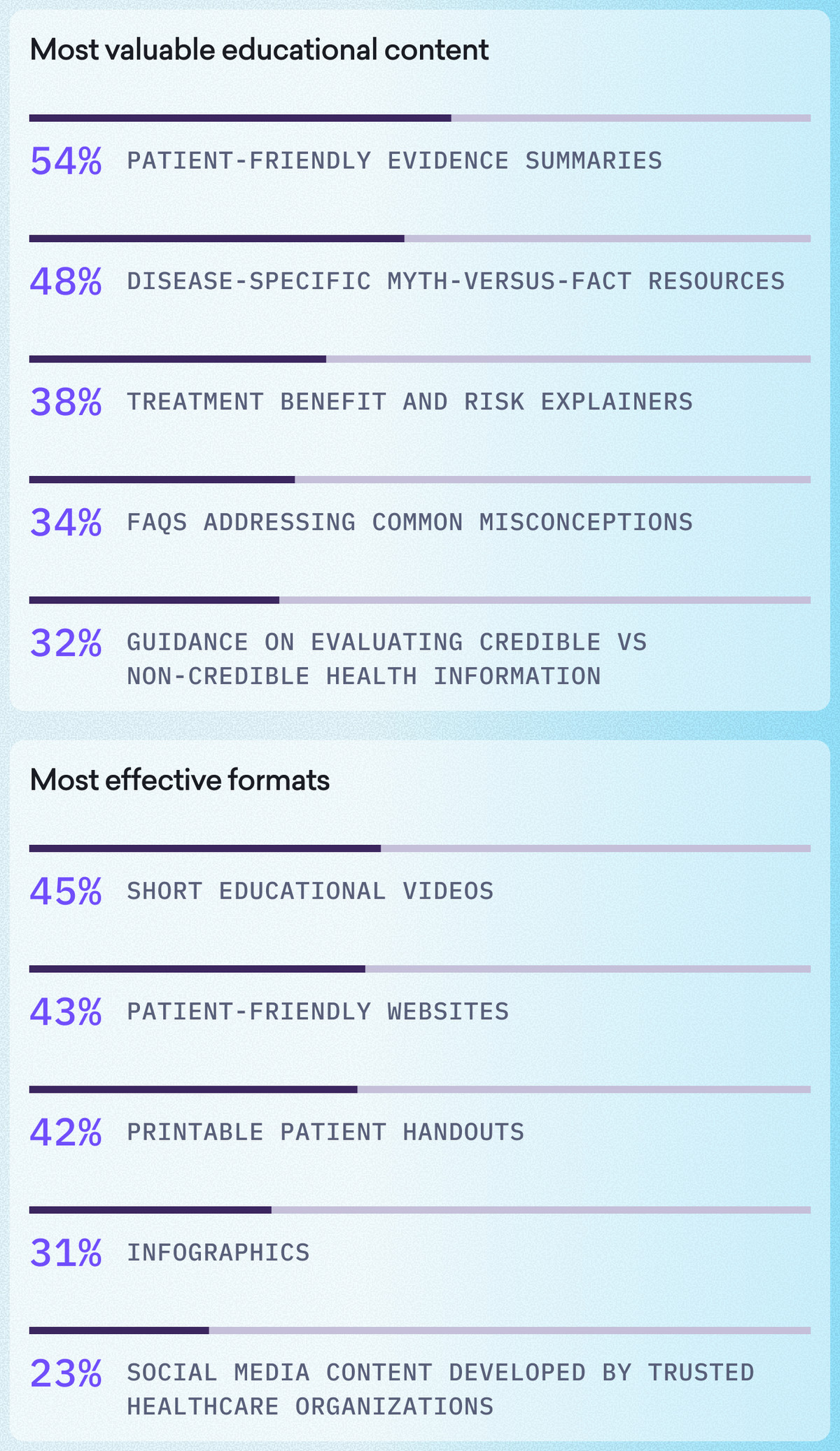
They also made it clear how they want those resources delivered: through short educational videos, patient-friendly websites, printable handouts, infographics, and trusted digital content that patients can easily access and share.
The message is clear. Physicians aren’t asking for more promotional content. They’re asking for educational content that helps them explain complex science, correct misinformation, extend conversations beyond the appointment, and strengthen trust with patients.
Download the full report
Social media and AI aren’t replacing physicians, but they are fundamentally reshaping patient expectations before the exam room conversation even begins.
For pharmaceutical marketers, understanding that shift is no longer optional. It’s essential to creating education that builds trust, supports physicians, and helps patients make more informed decisions.
Download the full HCP Sentiment Part 20 report for the complete findings, with a closer look at physician perspectives across seven global markets.