
The conversation around prescription drug costs in the U.S. is always evolving, and the introduction of new platforms aims to provide solutions. One of the latest entrants is TrumpRx, a government-backed, direct-to-consumer website intended to help patients find more affordable brand-name medications. But what do the people on the front lines of healthcare—physicians—think about it?
We recently surveyed over 1,000 triple-verified U.S. physicians to get their clinical perspectives. The results reveal a community of doctors who are cautiously optimistic but largely skeptical, with many questioning the platform’s long-term impact on patient care and the root causes of high drug prices. Let’s dive into what they had to say.
A Familiar Tune: Value Compared to Existing Tools
One of the most telling insights from the survey is how physicians view TrumpRx in the context of the current landscape. Patients and doctors already use a variety of tools like GoodRx, manufacturer co-pay programs, and other discount card services. So, does TrumpRx offer something new?
According to our survey, not necessarily. Only 14% of physicians believe the platform offers meaningfully better value for patients than existing options. In contrast, almost a third (31%) feel its clinical value is about the same as what’s already available. This suggests that while another option is welcome, it may not be the game-changer some had hoped for.
Surface-Level Solution or Real Change?
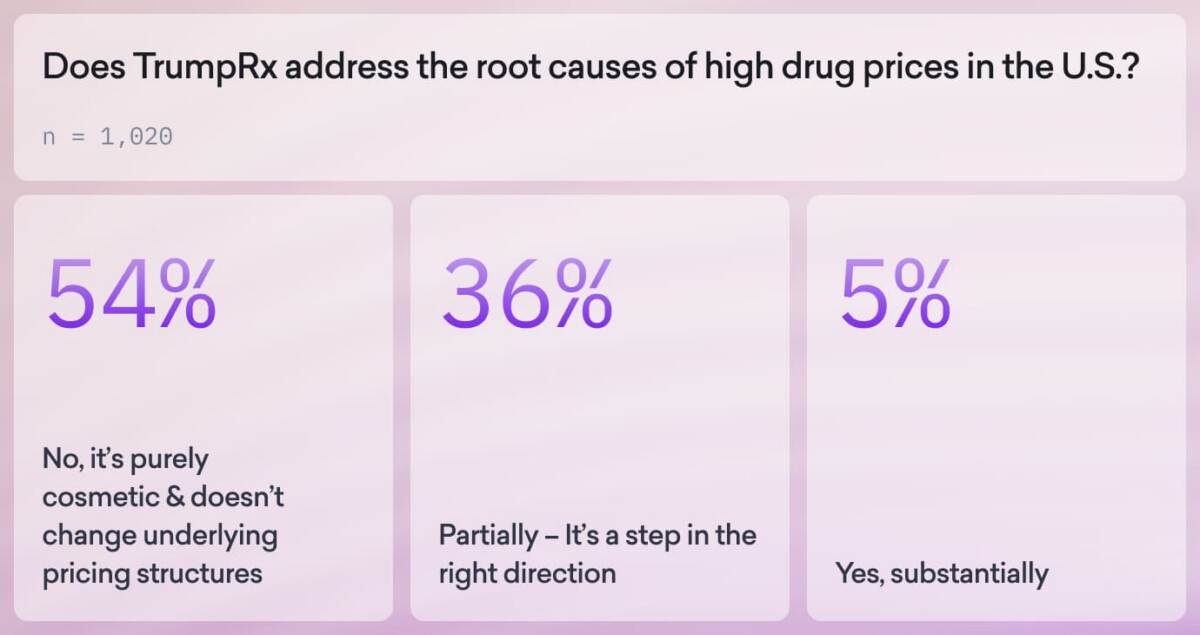
A major theme among physicians is skepticism about whether TrumpRx addresses the fundamental issues driving high drug prices. The majority of surveyed physicians (54%) view the platform as “purely cosmetic,” believing it doesn’t change the underlying pricing structures that make medications expensive in the first place.
However, not everyone is so dismissive. A significant portion (36%) sees TrumpRx as a step in the right direction, even if it’s not a complete solution. This group may see value in any effort that increases price transparency and patient access. Still, only a small fraction (5%) of physicians believe the platform substantially addresses the root causes of high drug costs.
Cautious Optimism Meets Limited Expectations
When physicians first heard about TrumpRx, their reactions were mixed. Nearly half (49%) admitted to being skeptical, questioning whether it could provide real savings. Yet, a notable 30% felt optimistic, hoping it could genuinely help some patients afford their medications.
Despite this initial flicker of hope, most physicians are tempering their expectations. More than half (56%) anticipate that TrumpRx will have a minor or no impact on their patients. Another third (33%) predict a moderate impact. This cautious stance suggests that while doctors are open to tools that help their patients, they remain pragmatic about the potential for widespread change from a single platform.
Patient Inquiries: A Trickle Before the Flood?
So far, TrumpRx hasn’t generated a massive wave of questions from patients. Only 23% of physicians reported that one or two patients have asked about it, with just 7% seeing many inquiries. However, doctors are bracing for change. More than half (56%) expect their patients will start asking about it in the future.
As for the platform’s user-friendliness, opinions are divided. A plurality of physicians (43%) think it will make navigating medication options somewhat/significantly easier for patients. Meanwhile, 39% believe it will offer no meaningful change from the status quo, and 18% worry it could actually make the process harder. The jury is still out on whether the site will simplify or complicate the patient journey.
Who Benefits Most? The Uninsured and Weight-Loss Seekers
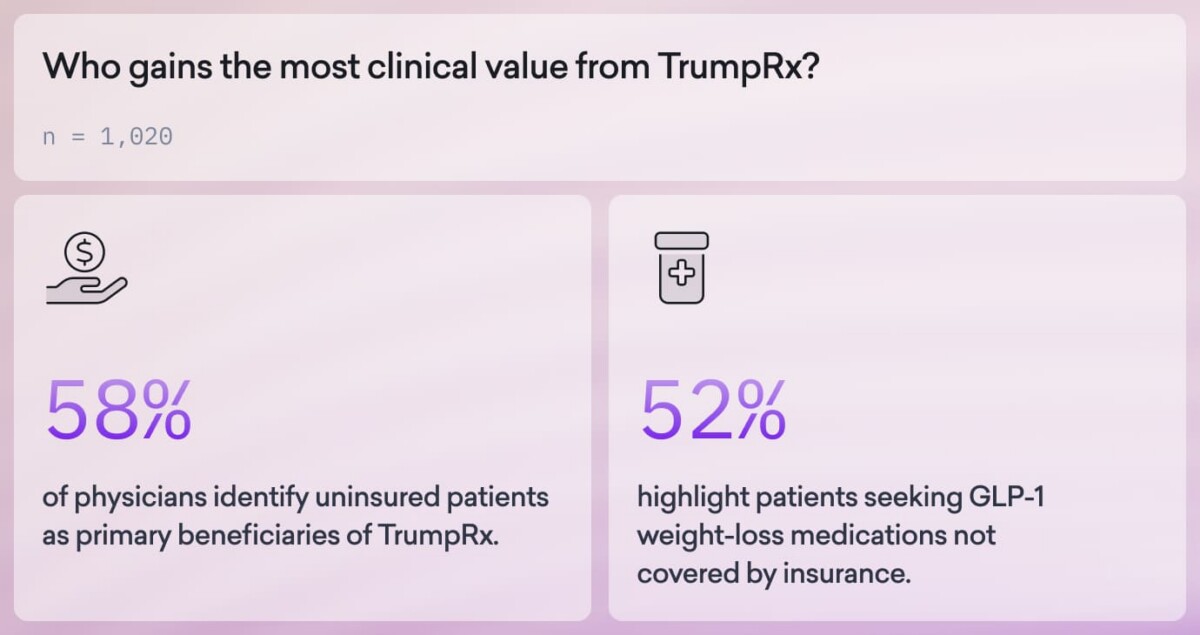
When asked where TrumpRx could provide genuine clinical value, physicians pointed to these two patient groups. A clear majority (58%) see the platform as beneficial for uninsured patients who struggle to afford brand-name medications. This group often falls through the cracks of traditional insurance and discount programs.
The second group is patients seeking GLP-1 agonists for weight loss, a class of drugs often not covered by insurance. More than half of physicians (52%) believe TrumpRx will provide value for these individuals, offering a potential pathway to access these popular but costly treatments.
Can the Government Be an Objective Health Resource?
One of the more philosophical questions raised by TrumpRx is whether a government-branded website can feature specific brand-name drugs while remaining an impartial public health resource. Physicians are split on this issue.
40% of surveyed doctors agree that a government-backed site can maintain objectivity. They may believe that federal oversight can ensure the information provided is fair and unbiased. On the other side, 30% disagree, expressing concern that featuring specific brands could compromise the government’s role as a trusted, neutral source of health information.
What this means for Patients and Providers
The physician community’s perspective on TrumpRx is nuanced. While they see potential value for specific patient populations, particularly the uninsured, there is widespread sentiment that the platform doesn’t fundamentally alter the complex issue of drug pricing. Doctors remain supportive of any tool that can ease their patients’ financial burdens, but are also realistic, viewing TrumpRx as another tool in the toolbox rather than a complete overhaul of the system. As more patients learn about the platform, the true impact on clinical practice and patient access will become clearer.