How peer influence, trust, and context are reshaping physician engagement and prescribing.
Getting a physician’s attention is one thing. Earning their trust is another.
As physicians navigate growing information volume, AI-accelerated discovery, and limited time, the source and setting of information are carrying more weight. Where physicians encounter a message, who delivers it, and how they engage with it can shape whether that information is trusted, remembered, and ultimately acted on.
For pharma marketers planning HCP media for 2027, that puts new pressure on the media plan itself.
Here are five insights that should be part of the conversation.
01: Clinical context drives attention, retention, and credibility
Where a physician encounters information can be just as important as the information itself.
Physicians draw a clear distinction between environments they use personally and those they enter with a professional mindset, creating very different conditions for engagement.
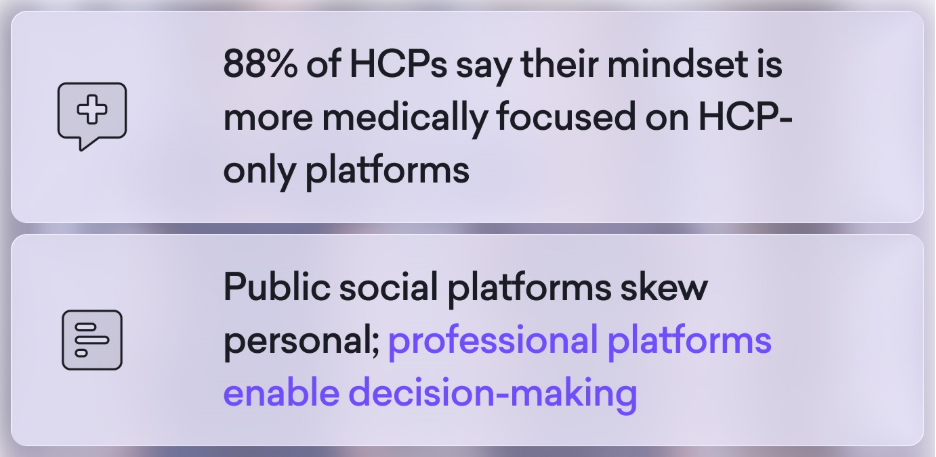
HCPs draw a clear line between professional and personal environments.
For pharma marketers, that makes context more than a placement consideration. A message encountered while a physician is actively thinking about clinical care has a different opportunity to capture attention, build credibility, and inform decision-making than the same message competing for attention in a personal feed.
As 2027 plans take shape, the question isn’t simply where you can reach physicians. It’s where they’re most ready to engage.
02: Trust isn’t a message you add later. It’s a channel decision.
Credibility doesn’t begin with the creative. The environment surrounding it matters, too.
HCP-only social platforms outperform general social media across every trust-based metric measured. Physician-only platforms score 91% for credibility, 86% for privacy, and 85% for both data security and value of information.
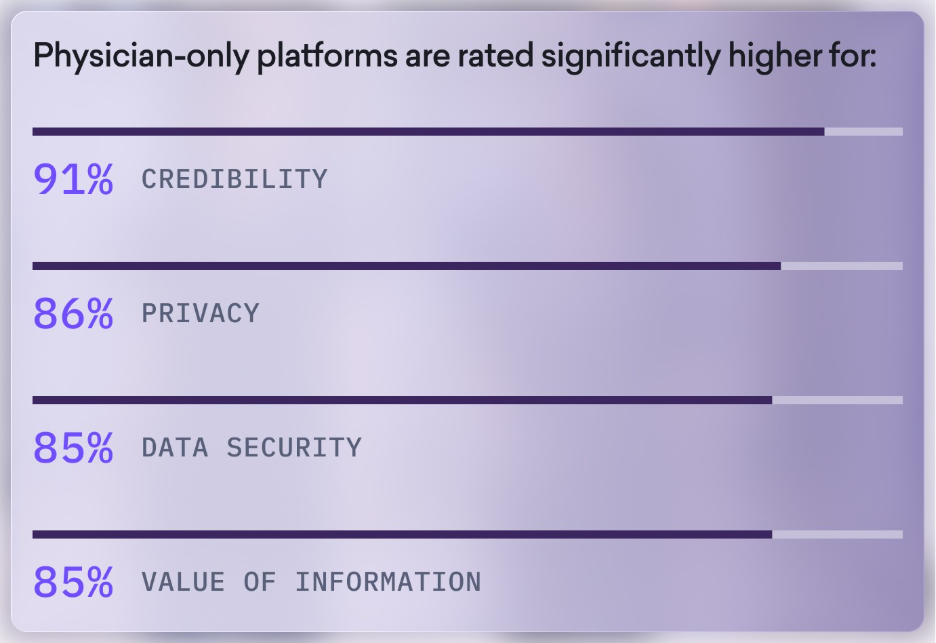
That means channel selection can reinforce or undermine the trust a brand is trying to build. When physicians already view an environment as credible, secure, and professionally valuable, the information they encounter there starts from a fundamentally different place.
For 2027 media planning, trust belongs upstream. It should help determine where a message lives, not simply how the message is written.
03: Peer influence carries the most weight
As information sources multiply, physicians are increasingly turning to a source they already know how to evaluate: each other.
Physicians trust each other more than any other source for medication information, with peers outranking MSLs, KOLs, and sales reps as preferred information sources. And 62% of HCPs say they now consult peers as much or more due to AI-driven information discovery.
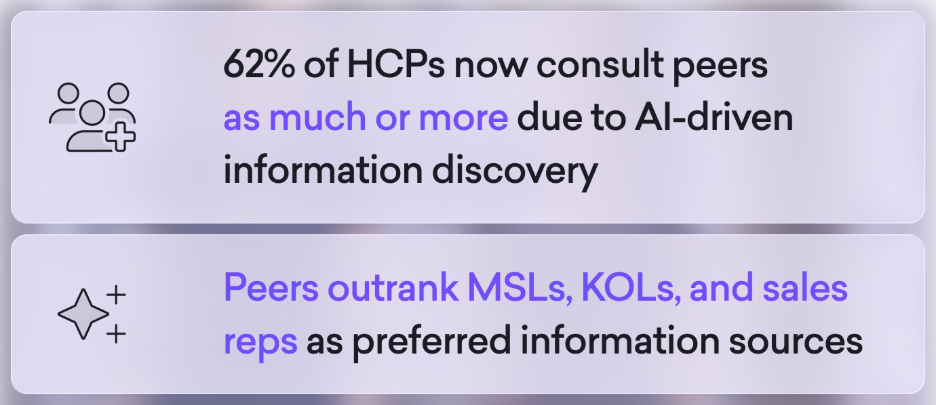
That finding is particularly important heading into 2027. AI may make information easier to find, but more information also creates a greater need to determine what deserves confidence. Peer perspectives can add clinical context and real-world experience that information alone cannot.
For pharma marketers, physician-to-physician exchange shouldn’t sit on the sidelines of the media strategy. Creating opportunities for credible peer perspectives to inform the conversation can be part of how influence is built.
04: Engagement quality beats reach
An impression can tell you that a physician had the opportunity to see something. It can’t tell you whether they found it useful.
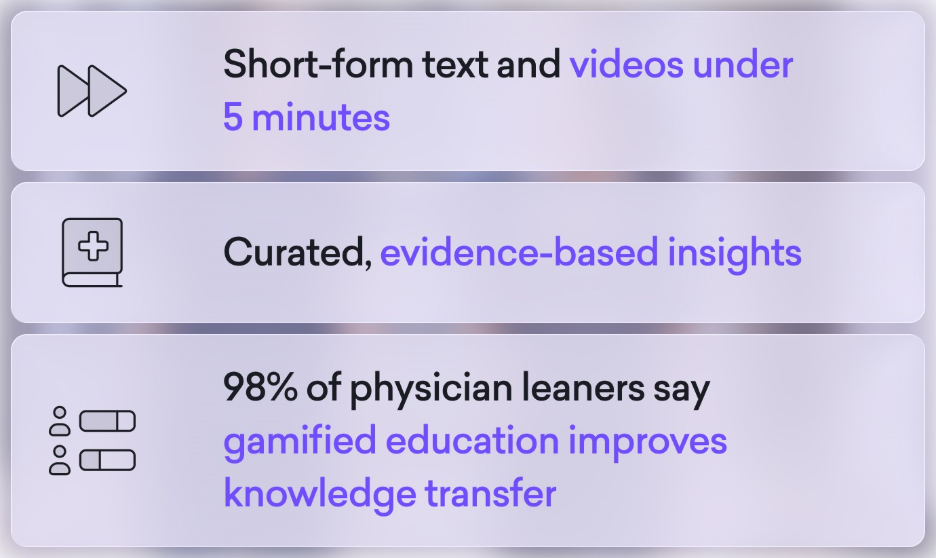
The formats that perform best with physicians point toward experiences designed for active engagement, including short-form text, videos under five minutes, curated evidence-based insights, and interactive learning. 98% of physician learners say gamified education improves knowledge transfer.
The common denominator is participation, not passive exposure.
That should push 2027 planning beyond the question of how many HCPs a campaign can reach. What matters is what physicians have an opportunity to do once you reach them: learn something, consider new evidence, participate in an experience, or engage with perspectives from their peers.
05: Behavior change requires sustained presence
Meaningful engagement also takes time.
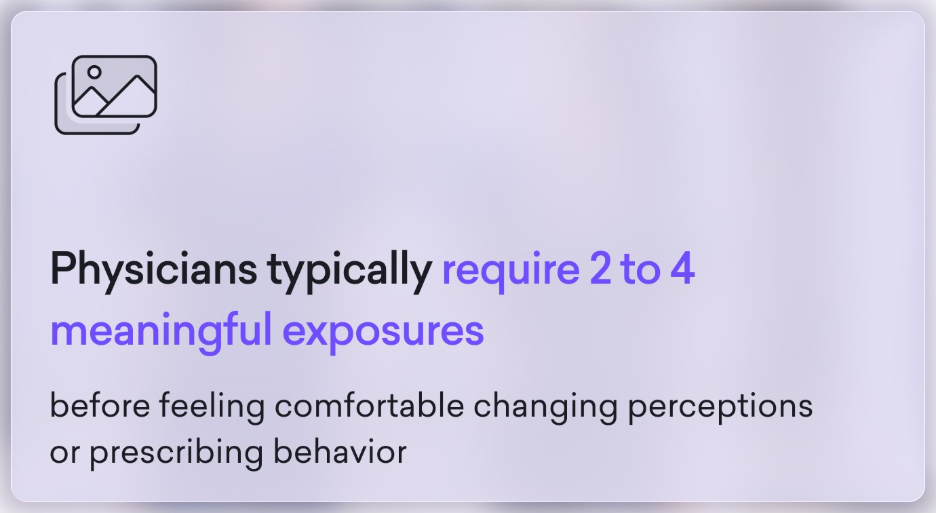
One-off campaigns can fall short because physicians need repetition to build confidence. Physicians typically require two to four meaningful exposures before feeling comfortable changing perceptions or prescribing behavior.
That makes sustained presence different from simply increasing frequency. Repeating the same message isn’t necessarily the same as creating multiple opportunities for physicians to build knowledge, validate information, and gain confidence over time.
For pharma marketers, the implication for 2027 is to think beyond one-off moments. The strongest strategies can create a connected series of meaningful interactions that build on one another, rather than asking a single impression or campaign to do all the work.
Influence doesn’t happen in a vacuum. It happens in trusted clinical communities.
The 2027 HCP media opportunity isn’t simply to reach more physicians. It’s to create the conditions that make information worth their attention and trust.
That means showing up in the right context, surrounding physicians with credible information and peer perspectives, giving them meaningful ways to engage, and staying present long enough to build confidence.
As AI makes information easier to find, the differentiator won’t be who can generate more content. It will be who can deliver information in environments physicians trust and alongside the peer conversations that shape real-world decisions.
Ready to build a smarter HCP media strategy for 2027? See how Sermo empowers pharma brands to engage verified physicians in trusted clinical environments, activate peer-to-peer influence, and create meaningful interactions that drive measurable impact. Book a demo to explore what’s possible.