
Consumer choice in vitamins and supplements is driven less by marketing noise and more by medical trust. While patients are inundated with wellness claims and influencer recommendations, physician guidance remains the most credible—and influential—signal of product legitimacy.
A January 2026 Sermo RealTime Study of 374 U.S. physicians reveals just how central doctors are in shaping supplement adoption—and what brands must do to earn their endorsement.
Physician guidance is driving vitamin and supplement decisions
Vitamin and supplement conversations between HCPs and patients are no longer occasional. They have become a core part of routine care.
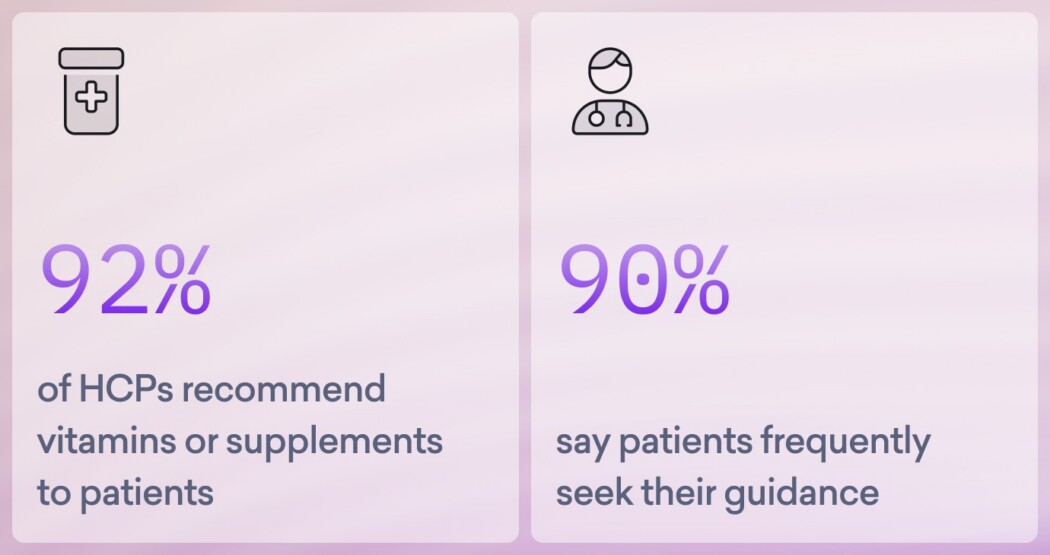
As consumers become more proactive about their health, physicians are fielding questions and offering guidance at unprecedented levels. 92% of HCPs recommend vitamins or supplements, and 90% say patients frequently seek their input, turning what was once a peripheral topic into a regular part of clinical dialogue. More than half (54%) report a noticeable rise in supplement-related questions over the past two years, which reflects the growing role of these products in everyday health decisions.
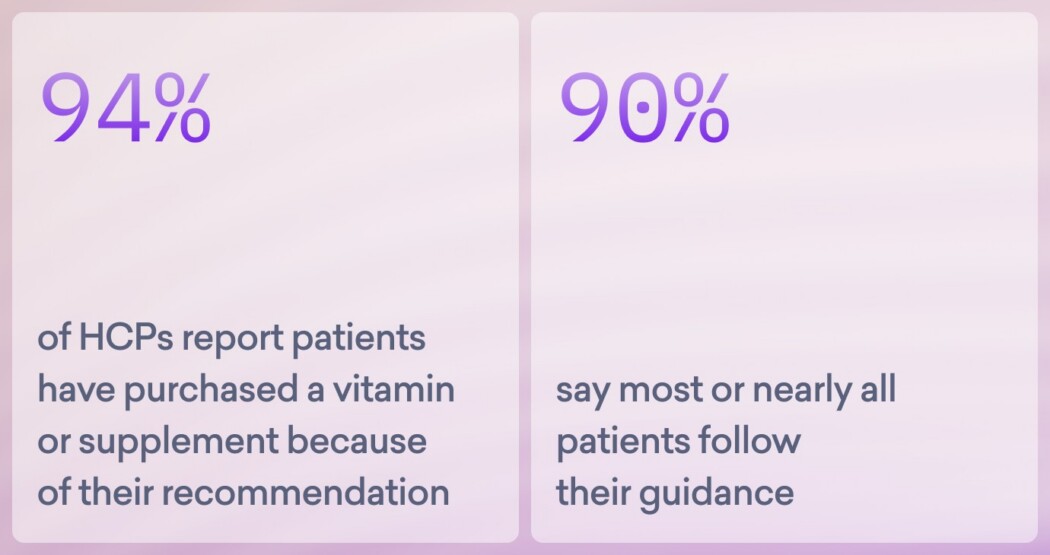
Patients are not only asking for guidance. They are acting on it. 94% of physicians say their patients have purchased a vitamin or supplement because of their recommendation, and 76% say most or nearly all patients follow their advice. Even when online information conflicts with medical guidance, 83% of patients still trust their physician, reinforcing the strength of this relationship.
In a crowded landscape, physician recommendations continue to outweigh social media, peer reviews, and traditional brand marketing.
Confidence is earned through evidence
As physicians take on a larger role in shaping consumer vitamin and supplement decisions, their recommendations depend on one central factor: trust in the science behind each product. What they choose to endorse reflects how a brand demonstrates safety, efficacy, and transparency.
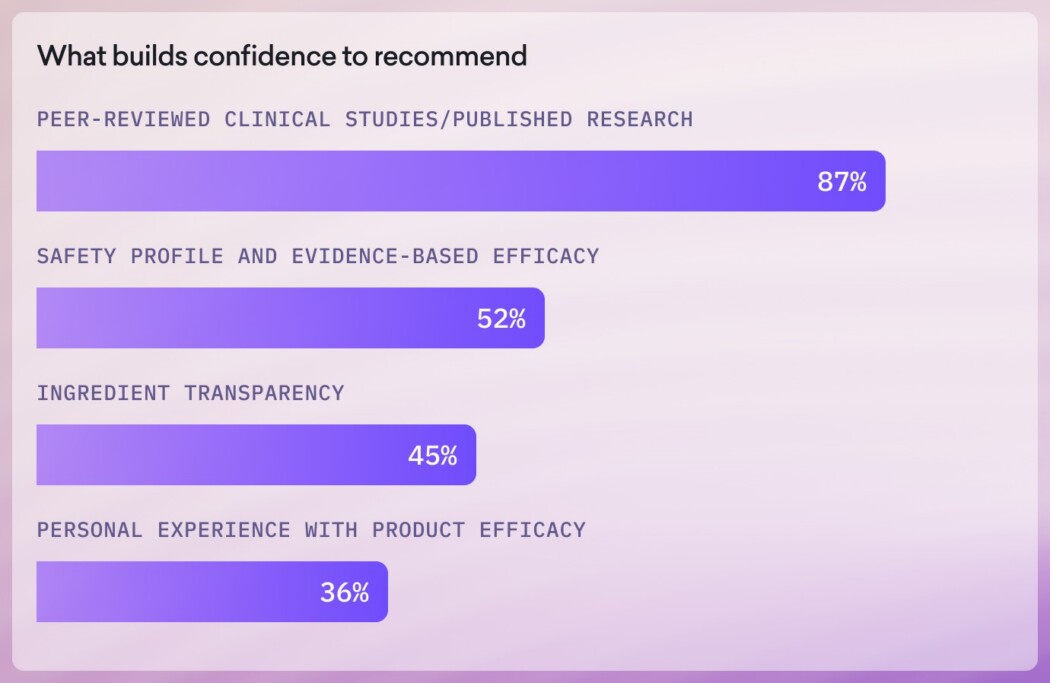
The data highlights this clearly. 87% of physicians say peer-reviewed clinical studies and published research most increase their confidence to recommend a vitamin or supplement. They also look for a strong safety profile (52%), transparent ingredient information (45%), and personal experience with product efficacy (36%). Each of these elements helps reinforce that a product is credible and clinically sound. Trust can also fade quickly:
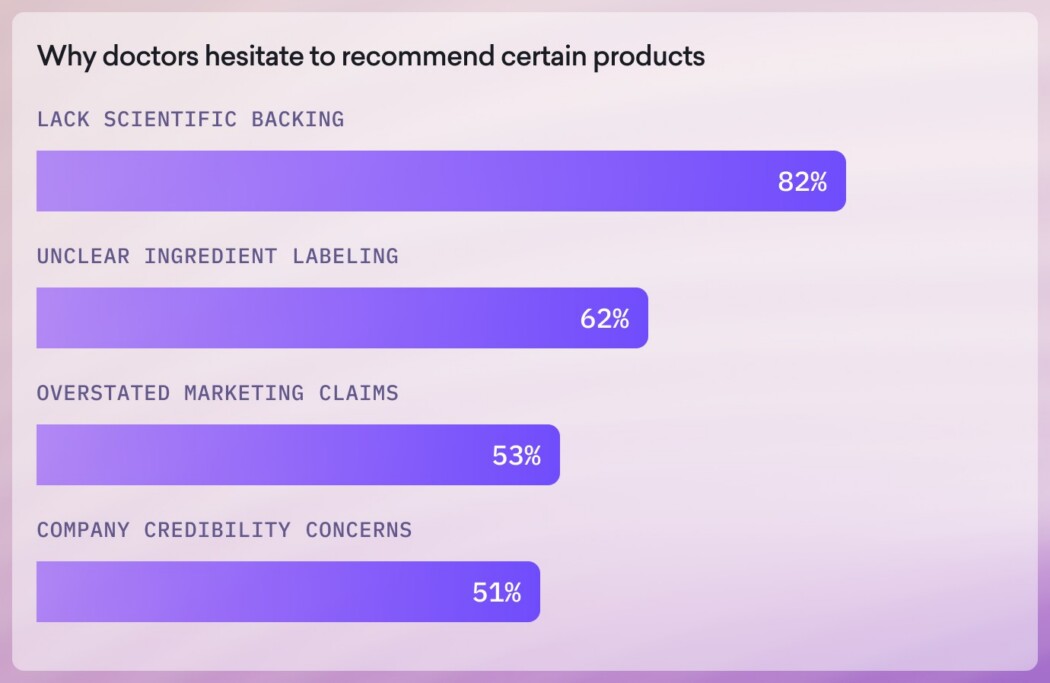
Lack of scientific backing is the top reason physicians hesitate to recommend a vitamin or supplement, followed by unclear labeling, overstated marketing claims, and company credibility issues.
For vitamins and supplements brands, the takeaway is direct. Physicians are willing to guide patients, but only when the information they receive meets clinical standards. Strong evidence is not optional. It is the foundation that earns their confidence.
Where & how physicians engage with vitamin & supplement brands matters
Even the strongest data can fall flat if it is not delivered in the right setting. Physicians want information presented in environments that feel credible, clinical, and grounded in peer expertise. How a brand shows up is just as important as what it shares.
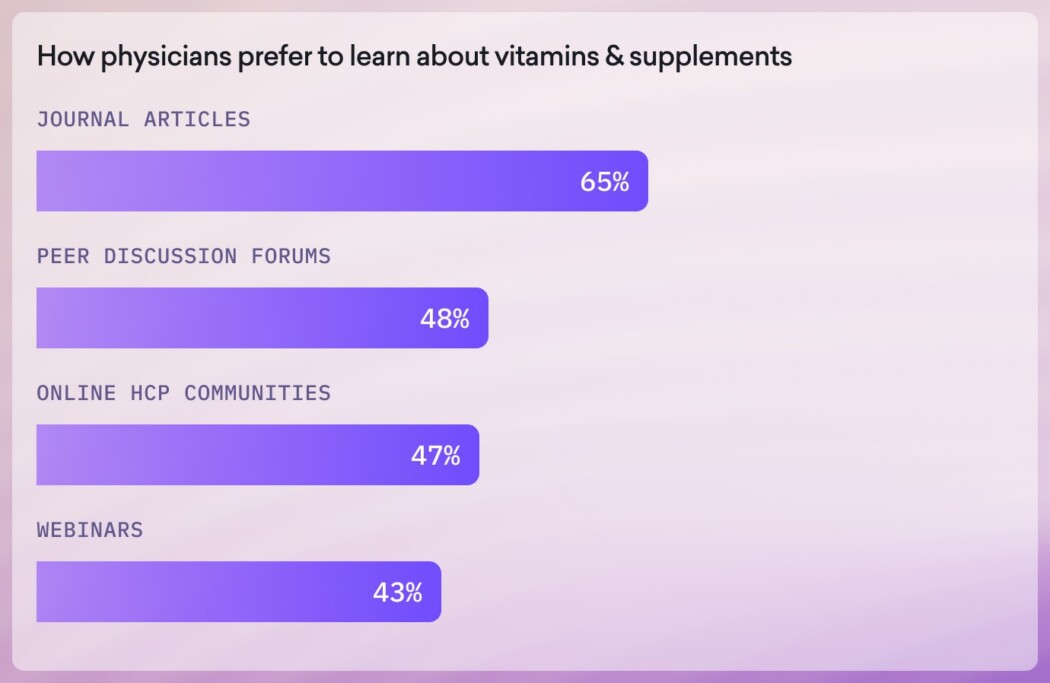
The study shows a clear preference for professional, peer-driven formats. Journal articles are the most trusted source of information since they allow physicians to evaluate research with the rigor they expect. Peer discussion forums and online HCP communities provide space for meaningful conversation, debate, and real-world interpretation of the evidence. Webinars also play a key role by offering structured, educational content that aligns with physicians’ desire for continuous learning.
These settings all share a common thread. They prioritize education, transparency, and clinical context, which are the factors that strengthen physician confidence. Traditional marketing tactics rarely achieve the same impact because they do not offer the depth or credibility physicians need to feel informed.
When brands show up where physicians prefer to engage, trust grows.
Turning physician trust into VMS market growth
Physicians most frequently recommend multivitamins (83%), OTC supplements (70%), specialty vitamins such as prenatal or bone health formulations (67%), and weight management or nutrition products (65%). For brands operating in these high-demand categories, the opportunity is significant.
The data makes the path forward clear. Vitamin and supplement adoption is closely tied to physician confidence, and confidence is built on research, transparency, and credible education delivered through trusted channels.
Sermo’s Engagement Manager connects vitamin and supplement brands with verified U.S. physicians in a secure, HCP-only environment. By sharing peer-reviewed research, safety data, and transparent product information where physicians prefer to engage, brands can build the trust that drives recommendation and ultimately, patient choice.
Create a free account today and begin turning physician confidence into measurable growth.