If you’re a hospital or facility nurse thinking about making the jump to home health to enjoy more autonomy and flexibility, you’re weighing the same questions that many nurses across the Sermo community are working through right now. The Bureau of Labor Statistics reports that 187,670 RNs were employed in home health care services as of May 2024, and the sector is projected to grow 22% nationally from 2022 to 2032, making it one of the fastest-growing practice settings in nursing. But those numbers don’t tell you whether you’ll actually like the work or if it’s the right fit for your career.
Some who’ve already made the transition say it’s the best move they ever made, while others are honest about tradeoffs they didn’t see coming. As one nurse put it on Sermo, “Home hospice has been the calmest, most predictable job with the friendliest clients and families.” Another described how COVID pushed her to rethink the model entirely. “When Covid regulations came around and my position went from home visits to telehealth I opted to branch out on my own. I’m currently self-employed providing supportive care in homes for anyone who needs it.”
This article goes over what the work actually involves, where home health outperforms hospital nursing, where it falls short, and how to figure out whether it’s the right option for you.
Nurses on Sermo are sharing firsthand experiences with home health transitions, comparing agencies, and giving honest advice about the move. Join the conversation to see what your peers are saying.
What does a home health nurse actually do?
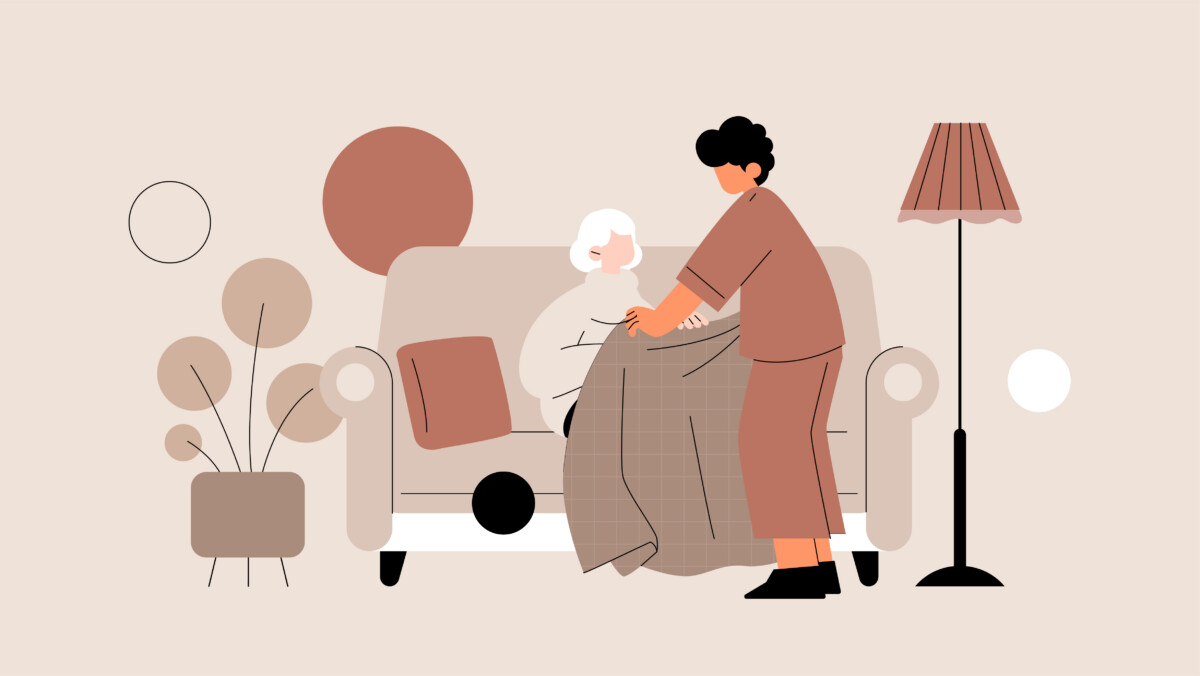
Home health nurses provide one-on-one care in patients’ homes, including health assessments, vital signs monitoring, medication administration, wound care, IV therapy, and educating patients and their families on how to manage between visits. You’re also functioning as a case manager in most situations, coordinating with physicians, therapists, social workers, and home health aides.
In the hospital, the goal is to stabilize and discharge. In home health, you’re playing a much longer game by helping patients build the skills and routines they need to stay out of the hospital.
The patient populations that need this type of support are broad, from elderly adults managing chronic conditions to post-surgical patients, pediatric cases, postpartum mothers, psychiatric patients, and hospice patients. Most patients strongly prefer to stay at home if given the choice, and home health nurses are the ones who make that possible.
A nurse talked on Sermo about her own career path. “I am working in home health with the geriatric population now but I spent most of my career with mothers and babies.”
Another nurse described how the role differs from hospital work. “You tend to build long-term relationships with residents, so care is more holistic, covering not just clinical needs but emotional, social, and end-of-life support as well. If you enjoy continuity of care and building meaningful relationships with patients, you may find it very fulfilling.”
Benefits of home health nursing for nurses
When nurses in the Sermo community talk about why they switched to home health and why they stayed, the same themes keep coming up.
Autonomy and independent clinical practice
In home health, there’s no charge nurse hovering around and no attending physician down the hall. You’re in charge of your own schedule and how you manage your caseload throughout the day. If you’re the type of nurse who wants to run your own day rather than wait for orders, this is one of the biggest draws.
Schedule flexibility and work-life balance
Hospital nursing locks you into 12-hour shifts, mandatory overtime, and rotating weekends. Home health gives you much more say in when and how much you work. Options range from full-time agency roles to per diem and PRN shifts, and that flexibility is why many nurses with families or other commitments end up in home health and don’t look back. For nurses comparing scheduling options, it’s also worth understanding how home health stacks up against travel nursing.
Deeper patient relationships and one-on-one care
Home health gives you time with each patient that hospital floors almost never allow, which many nurses find incredibly rewarding. You’re able to build real relationships and see patients where they actually live, gaining insight into how they eat, who supports them, and what factors might be getting in the way of their recovery.
Reduced workplace stress and politics
Home health nurses consistently say that leaving behind unit politics and break room tensions was one of the biggest quality-of-life improvements. You’re still dealing with stress, but it’s clinical stress, not interpersonal stress, and for a lot of nurses that’s a much easier burden to carry.
Growing demand and job security for home health nurses
With 22% projected growth through 2032, home health is one of the most secure career paths in nursing. That demand shows up in the form of competitive pay, sign-on bonuses (averaging $2,304 for home care aides in 2025), and the ability to be selective about which agency and patient population you work with.
A neonatal nurse shared on Sermo how she first got drawn to the field. “I remember back in the 80’s tagging along with my mom who was a home health aide and visiting her patients. They were always so grateful and appreciative of everything she did. My mother took pride in helping them and really enjoyed it. So after high school I decided to pursue becoming an RN and it has brought me lots of joy and fulfillment.”
Challenges of home health nursing that nurses should consider
Home health nursing is hugely appealing for many reasons, but it’s not right for everyone. Here are the challenges worth weighing before you commit.
Heavy documentation and OASIS assessment burden
Ask any home health nurse about their biggest frustrations, and documentation will almost always come up. The OASIS assessment (Outcome and Assessment Information Set) is mandatory for Medicare patients, and it’s notoriously time-consuming, detailed, and unlike anything you’ve dealt with in hospital charting.
Self-employment tax and financial responsibilities
Many home health nurses work as 1099 independent contractors rather than W-2 employees. The gross pay is usually higher (typically 10 to 20% more per hour), but you’re also taking on a lot more financial responsibility. As a 1099 contractor, you’re paying the full 15.3% self-employment tax rather than the 7.65% that comes out of a W-2 paycheck. You’re also responsible for quarterly estimated tax payments, health insurance, and funding your own retirement through a Solo 401(k) or SEP IRA.
On the flip side, 1099 nurses get access to deductions that salaried nurses don’t. You can write off your driving (72.5 cents per mile in 2026), supplies, scrubs, CE courses, licensing fees, and your full health insurance premium. The QBI deduction also lets you take up to 20% off qualified business income.
Working alone without immediate clinical backup
There’s no code team down the hall and no colleague nearby to bounce a question off of. When a patient’s condition changes unexpectedly, you’re the one making the call. That takes clinical confidence that only comes with experience, which is why most home health nurses recommend at least a year or two of hospital nursing first.
Unpredictable home environments and personal safety
You’re walking into someone else’s space, and you can’t control what that looks like. Some homes are clean and welcoming, while others are chaotic, unsanitary, or tense. Family dynamics, pets, and neighborhood safety can all factor in, and some patients may be uncooperative, resistant to care, or see you as an intrusion on their privacy.
The legal exposure is also worth knowing about. According to a Nurse.org study highlighted on Sermo, the average home health malpractice claim cost $301,031, well above the $236,749 average across all nursing settings. When you’re working alone in unpredictable settings, every clinical decision carries more weight.
Travel demands and lack of equipment
You’ll need your own car and should expect a significant chunk of your day to go toward driving. Mileage reimbursement varies widely by agency, and some nurses report logging a hundred miles in a single day. You’re also working without the equipment and technology that hospitals provide, so you learn to improvise with whatever each patient’s home has available.
Professional isolation from nursing colleagues
Without a team around you, there’s no one to learn from in real time and no one to decompress with between patients. That wears on you, especially if you’re coming from a collaborative hospital environment. Communities like Sermo help fill that gap, giving home health nurses a place to connect with peers for clinical questions, career advice, or just to vent.
A nurse described on Sermo the toll that comes with the territory. “I’ve been a nurse almost forty years and I reached the point where I just didn’t have the energy for it any more. I was juggling eighteen home health clients who were always in crisis and driving a hundred miles a day to see them. I stepped back. I’m self-employed doing supportive care in homes for anyone who needs extra hands.”
Another nurse shared the emotional weight of losing patients you’ve grown close to. “I too work as a home health nurse. Yes I have bonds with quite a lot of them. Someone I built a good relationship with died last year. I went to the funeral, but felt very guilty as I was crying throughout and I only knew this person around a year, and that’s such a minuscule time compared to family and friends.”
Connect with peers who get it. Discover how Sermo offers nurses a supportive, candid space to share experiences, challenges, and humor. Learn more.
Home health nurse salary vs. hospital nurse salary in 2026
If you’re thinking about making the switch, salary is probably one of the first things you looked up. The headline numbers suggest home health pays well, and they’re not wrong, but the full picture is more complicated.
- National average home health nurse salary: approximately $95,285 per year, or $45.81 per hour.
- Overall RN median salary: $89,070 per year. Hospital inpatient RNs average roughly $92,000 per year.
- Per diem home health nurses: can earn approximately $101,700 per year, or $48.90 per hour.
Pay also varies a lot by agency type. Visiting nurse associations pay a median of $43.00 per hour, hospital-based agencies come in at $41.29, not-for-profits at $38.72, and for-profit agencies at $36.86.
Those numbers look competitive, and in many cases they are. But the comparison gets more complicated when you factor in everything else. Hospital nurses often get shift differentials for nights and weekends, overtime pay, and benefits packages that include retirement matching and tuition reimbursement. Many home health roles, especially per-visit or per-diem positions, don’t come with any of that.
You also need to account for unreimbursed costs like vehicle wear, fuel, and the hours you spend driving between visits without getting paid. The real take-home gap could be smaller or larger than the salary data suggests, depending on your specific situation.
Home health’s flexible schedule does open up room for supplemental income through nurse side gigs and paid surveys on Sermo. Nurse practitioners can also explore NP-specific side hustles or other alternative NP career paths that pair well with a flexible home health schedule.
Tips for succeeding as a home health nurse
If you’ve decided to make the move, here’s the practical advice that comes up most often from experienced home health nurses.
- Get your hospital experience first: The clinical instincts you build during a year or two in med-surg, the ER, or the ICU are what allow you to function independently later.
- Master your time management: The nurses who do best in home health treat their schedule like a business, grouping visits by geography to be more efficient, charting in batches instead of at the end of the day, and drawing a clear line between work time and personal time. Without that structure, the flexibility that drew you to home health starts working against you.
- Learn OASIS early and thoroughly: Every agency trains you on the assessment, but there’s a difference between knowing which boxes to check and actually understanding why those questions exist. Nurses who learn the reasoning upfront spend less time wrestling with it later.
- Set boundaries with patients and families: Patients and families will push your boundaries, sometimes without realizing it, by asking you to stay longer, take calls after hours, or help with things outside your scope. Being genuinely caring while holding clear professional limits is a skill you’ll use every day in this role.
- Stay connected to other nurses: Without a break room or a team huddle, you have to be intentional about building a peer network. Communities like Sermo give home health nurses a space to connect for clinical questions, career advice, or just to decompress.
- Keep your clinical skills sharp: In the hospital, you’re exposed to a wide range of clinical situations, whether you seek them out or not. In home health, that variety doesn’t come automatically, so you need to pursue continuing education on your own.
- Track your mileage and expenses from day one: It’s easy to let this task slide, but those deductions can potentially save you thousands at tax time and are easy to document using apps like MileIQ or Stride.
Key takeaways
- Home health nursing is projected to grow 22% through 2032, making it one of the fastest-growing practice settings for nurses.
- The biggest draws are clinical autonomy, schedule flexibility, one-on-one patient relationships, and less workplace politics.
- The biggest challenges are OASIS documentation, working without clinical backup, unpredictable home environments, professional isolation, and the financial complexity of 1099 contractor work.
- Home health RNs average $95,285 per year, but total compensation depends heavily on agency type, pay structure, and unreimbursed costs like driving.
- Most experienced home health nurses recommend at least one to two years of hospital experience before making the transition.
Is home health nursing right for you?
Home health is one of several alternative nursing careers that offer a real change from hospital work, but it’s not a step up or step down. It’s a lateral move into a fundamentally different practice setting, with its own rewards and tradeoffs. Whether it’s the right choice comes down to where you are in your career, how confident you feel working without a team, and what your lifestyle and financial situation look like at this stage.
Nurses on Sermo are sharing real experiences with the home health transition, comparing agencies, and giving honest career advice. Join the community to connect with peers who have navigated this exact decision and hear from nurses who work in home health every day.