
Blog  /  Insights

Sermo physicians support a fast-tracked vaccine approach

Gloved hands prepare a syringe with a vial in a laboratory setting, where test tubes stored above hint at the fast-tracked vaccine process.

In a recent Sermo poll of 1,140+ global physicians, 52% said they agreed with the fast-tracked approach to develop a coronavirus vaccine, despite the risks. This was in response to news that the biotech company Moderna reported positive early results from a coronavirus vaccine trial.

Moderna revealed that trial participants developed antibodies against the coronavirus, without any serious adverse effects. Phase 2 trials have been cleared by the US Food and Drug Administration, and if future studies continue to go well, the new vaccine could be available to the public by January 2021. When asked about the vaccine, 45% of the physicians polled said they were encouraged by this news and found it very promising. However, 42% were only somewhat encouraged, because they believe it’s too early to tell and there are too many variables; and 13% are not encouraged—believing it is too early to jump to any conclusions. 

Here’s what Sermo physicians are saying about the coronavirus vaccine…
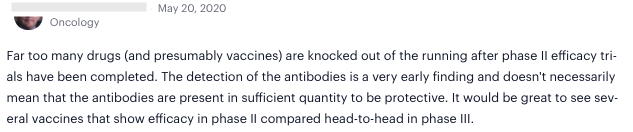
A text discussing the challenges faced by drugs and vaccines in phase III trials, highlighting Sermo physicians' support and the importance of antibody detection. It emphasizes the need for effective, fast-tracked vaccines in phase II trials to ensure quicker public availability.
In a medical discussion forum, Sermo physicians expressed concern over antibody durability and reinfection, highlighting the need for continued support and monitoring, especially with the fast-tracked vaccine rollouts.
A message from May 21, 2020, discusses COVID-19 solutions like global vaccination, including a fast-tracked vaccine supported by Sermo physicians, hand washing, PPE use, social distancing, and quarantine monitoring.
A comment on vaccine research underscores the need for more time and global cooperation to ensure safety and effectiveness. With insights from physicians worldwide, platforms like Sermo suggest it might take two years or more.