When it comes to early cancer detection, the Galleri cancer blood test has emerged as a prominent name. Designed to identify more than 50 types of cancer through a single blood draw, it holds promise for detecting certain cancers before symptoms appear—though some physicians are reserving their optimism. Does this test live up to its potential in the real world, according to practicing physicians? Drawing on insights from the Sermo community, we’ll explore the clinical value, costs, and practical challenges of the Galleri cancer test, which will help forecast its widespread adoption or rejection in the medical field.
What is the Galleri test?
Cancer is a complex disease with a significant global burden, projected to increase to 29.5 million new cases and 16.4 million deaths annually by 2040.
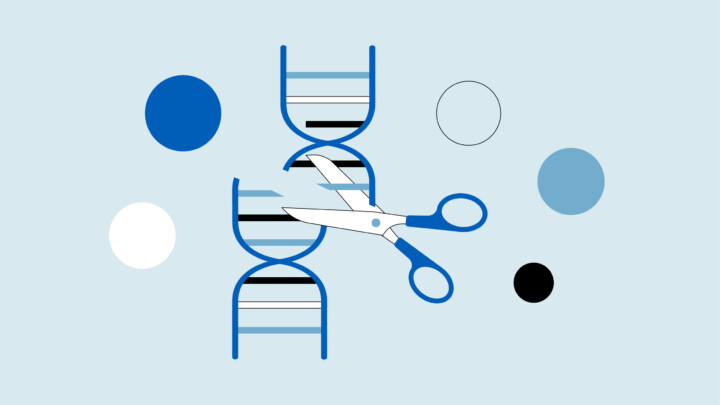
The Galleri cancer blood test is a screening tool designed for the early detection of multiple types of cancer. It uses advanced genomic technology to analyze the methylation patterns of cell-free DNA (cfDNA) fragments—specifically circulating tumor DNA (ctDNA)—in the blood, which may signal the presence of cancer. Beyond identification, it aims to predict the tissue of origin.
What makes it stand out is its ability to test for a wide range of cancers, including several types that lack standard screening protocols, such as pancreatic and ovarian cancer. Its potential to transform cancer diagnostics has generated discussion across the medical community, particularly among oncologists and hematologists.
However, as promising as it sounds, the test also raises questions about accuracy, accessibility, and clinical adoption.
Galleri test at a glance:
| Attribute | Detail |
|---|---|
| What is it? | A multi-cancer early detection (MCED) blood test developed by GRAIL that analyzes cell-free DNA (cfDNA) in a single blood draw to detect methylation patterns associated with cancer. |
| What does it screen for? | A shared cancer signal across more than 50 types of cancer, including many that have no recommended standard screening tests (pancreatic, ovarian, esophageal, liver, stomach, and others). When a signal is detected, the test also predicts the likely tissue of origin. |
| Is it FDA approved? | No. Galleri is available as a laboratory-developed test (LDT) under CLIA regulations. GRAIL is pursuing FDA approval through ongoing trials (PATHFINDER, NHS-Galleri). |
| Who is it intended for? | Adults aged 50 and older with an elevated risk of cancer, as a complement to (not replacement for) standard cancer screenings. Requires a prescription from a healthcare provider. |
| Does it replace routine cancer screening? | No. Galleri is intended to be used alongside guideline-recommended screenings (mammography, colonoscopy, cervical cancer screening, low-dose CT for lung cancer, prostate screening). It does not replace any of these. |
| List price | Approximately $949 per test (self-pay), paid directly to GRAIL at the time of ordering. |
| Insurance coverage | Generally not covered by commercial insurance or Medicare because it is not FDA approved and does not have USPSTF endorsement. Some employers offer it as a benefit; some HSA/FSA accounts may be used. |
| Does a negative result rule out cancer? | No. A “No Cancer Signal Detected” result does not rule out cancer. The test has limited sensitivity for early-stage cancers, and patients should continue all guideline-recommended screenings regardless of the result. |
| Does a positive result mean you have cancer? | No. A “Cancer Signal Detected” result requires diagnostic follow-up (imaging, biopsy, specialist referral) to confirm or rule out cancer. False positives occur. The test also predicts tissue of origin to guide the diagnostic workup. |
| Sensitivity | Overall sensitivity across all stages is approximately 51.5% per GRAIL’s PATHFINDER and CCGA studies. Sensitivity is substantially lower for Stage I cancers (around 16-17%) and higher for later-stage cancers (around 77% for Stage III, 90%+ for Stage IV). |
| Specificity | Approximately 99.5%, meaning the false positive rate is roughly 0.5%. |
| Tissue of origin accuracy | When a cancer signal is detected, the predicted tissue of origin is correct approximately 88% of the time per GRAIL’s clinical data. |
| How often is it taken? | Annually, per GRAIL’s recommendation, as part of ongoing cancer screening for eligible adults. |
| Turnaround time | Approximately 10 business days from sample receipt at the lab to results delivery to the ordering provider. |
| Who orders it? | A licensed healthcare provider. GRAIL also partners with telehealth providers for patients whose primary care physician does not order the test. |
| Key regulatory status | Breakthrough Device Designation from the FDA (2019), but this is not the same as FDA approval. Full approval pathway is ongoing. |
Physician perspectives on the Galleri test
Sermo surveyed its global community to see how physicians feel about the Galleri test. The feedback is illuminating, revealing both curiosity and skepticism.
Galleri test accuracy & diagnostic utility
The Galleri test has demonstrated high specificity (99.5%), meaning it produces very few false positives—a critical factor in minimizing unnecessary follow-up procedures and reducing patient anxiety. However, its overall sensitivity for cancer signal detection is 51.5%, with detection rates increasing significantly by cancer stage. Sensitivity was just 16.8% for stage I cancers, but rose to 40.4% for stage II, 77.0% for stage III, and 90.1% for stage IV. In a subset of 12 cancers responsible for the majority of U.S. cancer deaths, stage I–III sensitivity reached 67.6%.
Physicians on Sermo have noted both optimism and hesitation. According to a recent poll, 58% believe the test can adequately assess cancer risk and improve screening, while 42% remain unconvinced. One family medicine physician commented, “Any diagnostic test for cancer, with more than 50% probability of certainty, would be of great help in the important early diagnosis of cancer.”
Despite the test’s strong specificity, 41% of surveyed physicians believe that concerns over false positives may hinder broader adoption. Additional concerns include cost (28%), lack of insurance coverage (21%), limited media understanding (6%), and confusion with other liquid biopsies (4%). Another concern lies in clinical alignment: Only 58% of physicians feel the test currently complements existing screening protocols. As one oncologist remarked, “There’s potential here, but the data just isn’t there yet for most of us to feel comfortable using it regularly.”
Reducing patient confusion & anxiety around cancer screening
There already exists an overwhelming level of confusion among patients regarding recommended cancer screenings. 88% of physicians have observed patients struggling to understand the number and frequency of recommended routine cancer screenings.
On top of this, the majority of cancer doctors have reported a downward trend in preventative screenings by patients since the pandemic. 76% of oncologists and hematologists surveyed reported patients delaying appointments and treatment due to the pandemic, and 52% observed a decrease in the rate of cancer screenings, particularly mammograms (74%) and colonoscopies (70%).
Another major recurring theme is the cost of false positives, both in terms of follow-up testing and emotional strain.
“The ‘cost’ of false positives is often underestimated—both the cost in further unnecessary screening and the cost in patient (and physician) anxiety,” explained a Sermo member and OBGYN.
By consolidating multiple screenings into one blood test with high specificity, Galleri may help streamline the process, reduce patient confusion, and minimize the emotional toll of unnecessary follow-ups.
Galleri test cost, insurance, & accessibility
A major barrier to the widespread adoption of the Galleri test is its cost. At $950 per test in the U.S., accessibility becomes an issue for many patients without adequate insurance coverage.
“Until this test is covered by insurance, it’s not accessible for many patients,” highlighted a Sermo member and primary care physician.
Physicians frequently cite the absence of insurance reimbursement as a limiting factor. Out-of-pocket expenses deter many patients who otherwise might benefit from the early detection capabilities of the test.
This sentiment aligns with the belief of 21% of physicians on Sermo, who stated that the test’s high price tag will significantly impact its success.
“The main doubt and concern of these updated and newly introduced diagnostic methods is their cost, since several diagnostic tests are already difficult to access for the majority of the population,” echoed a GP.
Is the Galleri test ready for clinical adoption?
Will the Galleri test soon become a mainstay in routine diagnostics? Opinions among physicians remain divided.
Some highlight the promise of its multi-cancer approach. With a single test capable of detecting cancers that are typically caught in late stages, such early detection could save lives and reduce the need for aggressive treatments later.
“I believe that with the Galleri test… we will take a step forward in the timely diagnosis and rapid start of treatment,” said a Sermo member and family medicine doctor.
Yet, many physicians are calling for more robust longitudinal and real-world data before integrating the test into regular practice. Clinical outcomes and regulatory longevity are top concerns.
“Cancer screening tests should be inexpensive and easily applicable,” remarked a Sermo member and Oncologist.
Without definitive longitudinal studies, many physicians advise a cautious, case-by-case approach for now.
The path forward for multi-cancer early detection
The Galleri cancer blood test represents a potentially exciting leap forward in cancer screening, with the purported ability to identify more than 50 types of cancer in a single test. However, the feedback from the Sermo community highlights valid concerns about affordability, clinical adoption, patient anxiety, and real-world reliability.
The Galleri test has started being implemented by doctors as a supplemental tool rather than a singular solution. Physicians should weigh each patient’s specific risks, benefits, and financial feasibility before recommending the test.
For further insights into the Galleri test and to engage in ongoing discussions with global healthcare peers, join Sermo. Explore how your colleagues are navigating early cancer detection tools and contribute your perspectives to a thriving community of medical experts.
People also ask
The Galleri test is a multi-cancer early detection blood test that analyzes methylation patterns in cell-free DNA (cfDNA), including circulating tumor DNA (ctDNA), to detect signals associated with more than 50 types of cancer, often before symptoms occur.
The Galleri test has high specificity (99.5%), meaning it rarely produces false positives. However, sensitivity varies widely by cancer type and stage—as low as 16.8% for stage I cancers and as high as 90.1% for stage IV. While the test can detect over 50 cancer types, physicians remain divided on its accuracy as a routine screening tool due to limited early-stage detection rates and the need for more long-term data.
The test currently costs $950 in the U.S., and insurance coverage is generally unavailable at this time.
The test shows promise as a supplemental tool for detecting hard-to-screen cancers, especially in high-risk patients. But physicians have raised concerns about its relatively low sensitivity for early-stage cancers, out-of-pocket cost, and lack of insurance coverage. Most agree it’s not yet ready to replace standard screenings and should be used with careful patient selection and clear expectations.
No. GRAIL’s Galleri multi-cancer early detection (MCED) blood test is not FDA-approved. It is available in the United States as a laboratory-developed test (LDT) through a physician’s prescription, offered under CLIA (Clinical Laboratory Improvement Amendments) regulations rather than FDA premarket approval. GRAIL has been pursuing FDA approval through ongoing clinical trials, including the NHS-Galleri trial in the UK and the PATHFINDER studies in the US, but as of the most recent public information, the test has not received FDA clearance or approval. Physicians ordering Galleri should counsel patients that it is a screening tool used alongside, not as a replacement for, guideline-recommended cancer screenings, and that insurance coverage is limited because it is not FDA-approved.