By Erin Fitzgerald, Chief Marketing Officer, Sermo
The pharmaceutical industry is navigating one of the most dynamic moments in recent history. Regulations are tightening. Scrutiny over influencer marketing is rising. And the way physicians are educating themselves — accelerated by the rise of AI — is evolving at a pace few could have predicted.
But amid all this change, one truth remains constant: the enduring power of peer-to-peer physician influence.
At Sermo, we see this every day. Physicians don’t step into digital spaces as traditional “influencers” — they show up as trusted experts and opinion leaders. They translate complex science, debunk misinformation, and make evidence-based medicine accessible. In fact, physicians prefer to receive medication information from their peers above all other sources:
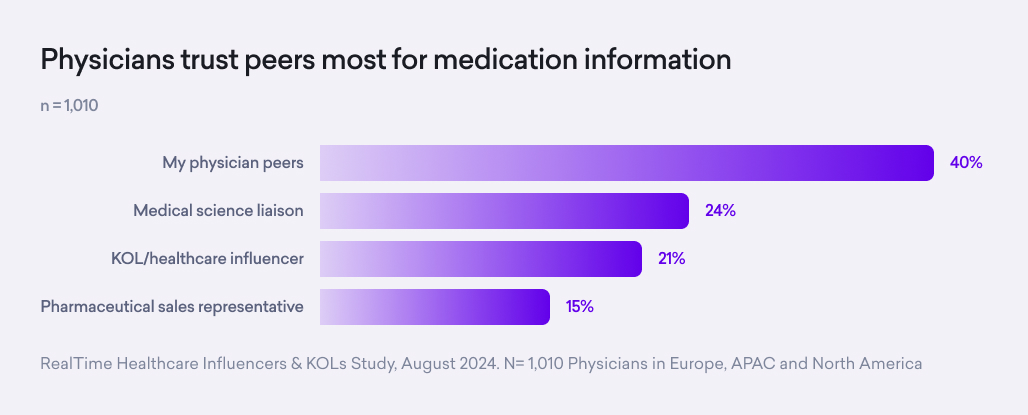
And that’s the opportunity: while regulations, platforms, and technologies shift around us, physician voices remain steady, credible, and deeply influential. This is the new frontier of healthcare influence — one being defined not by brands or algorithms, but by physicians themselves.
Why physician voices matter more than ever
Today, the problem isn’t access to information — it’s the overwhelming flood of it. Physicians and patients alike are struggling to separate credible science from the noise.
Physician opinion leaders cut through that clutter. They bring clinical authority, peer-level credibility, and an instinct for what matters most in practice. They take trial results, guidelines, and publication insights and deliver them in formats their peers and patients actually consume — short videos, sharp infographics, or posts that get straight to the point.
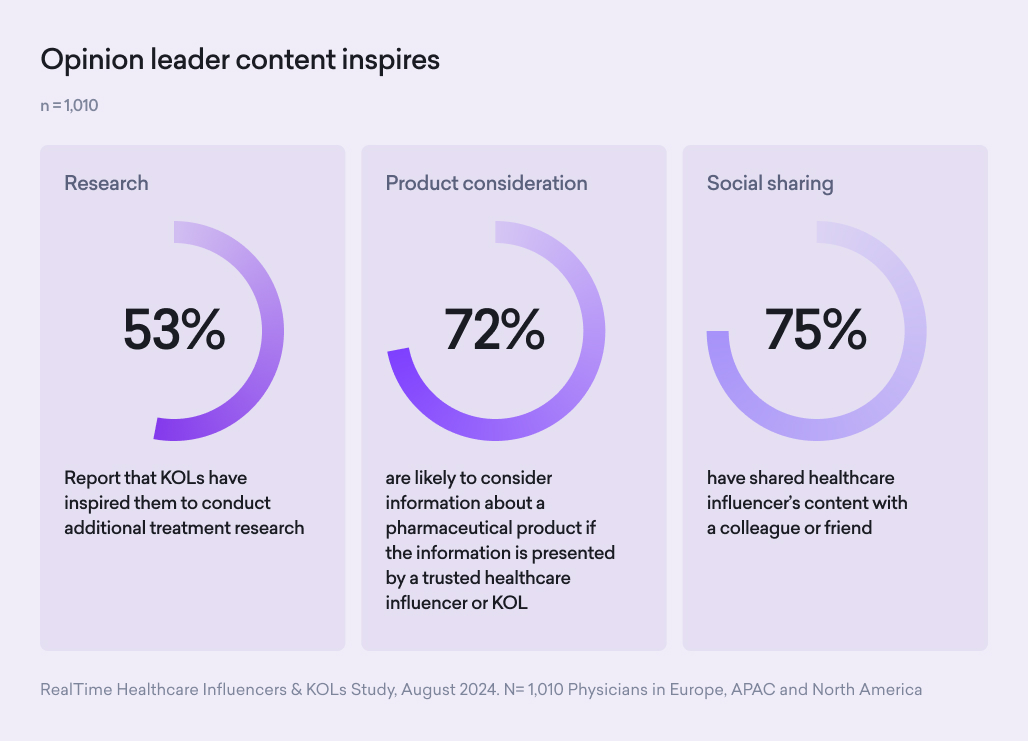
And when those messages spark peer-to-peer conversations, the impact is profound:
How pharma can overcome market obstacles by effectively partnering with opinion leaders
With influence comes opportunity — and responsibility. Recent regulatory shifts make it clear that business as usual is no longer an option.
The FDA is actively issuing warning letters and cease-and-desist orders to pharma brands for running misleading ads, requiring them to modify or altogether cancel media placements. We know that social media is also under the microscope. Physician creator content, algorithm-driven ads, and AI-generated health messaging are facing greater oversight, with transparency and compliance becoming mandatory.
For pharma, this means:
- Choosing the right voices
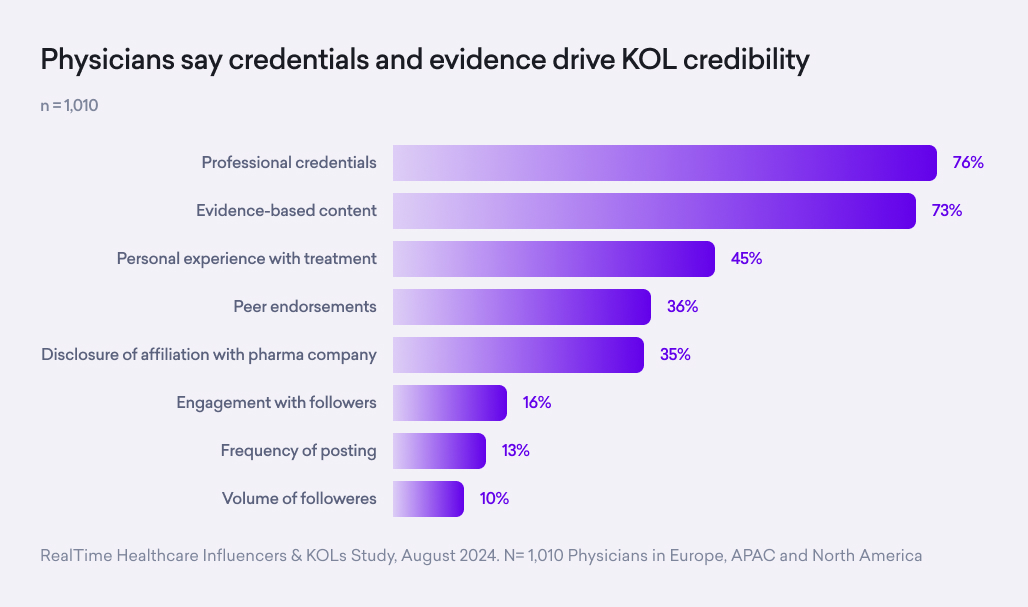
Credibility matters more than follower counts, evidenced by the 70%+ of physicians who cite professional credentials and evidence-based content as the two top factors that make a KOL credible in their eyes.
- Keeping the focus on science, not just the brand
Opinion leaders are not influencers in the traditional sense of the word. The strength of an opinion leader lies in their authority and credibility. While brand partnerships have their place, their real influence lies in championing the science—sharing trial data, guidelines, and published research. This evidence-based approach not only maintains trust but also maximizes their ability to shape clinical conversations. - Thinking short-form & video first
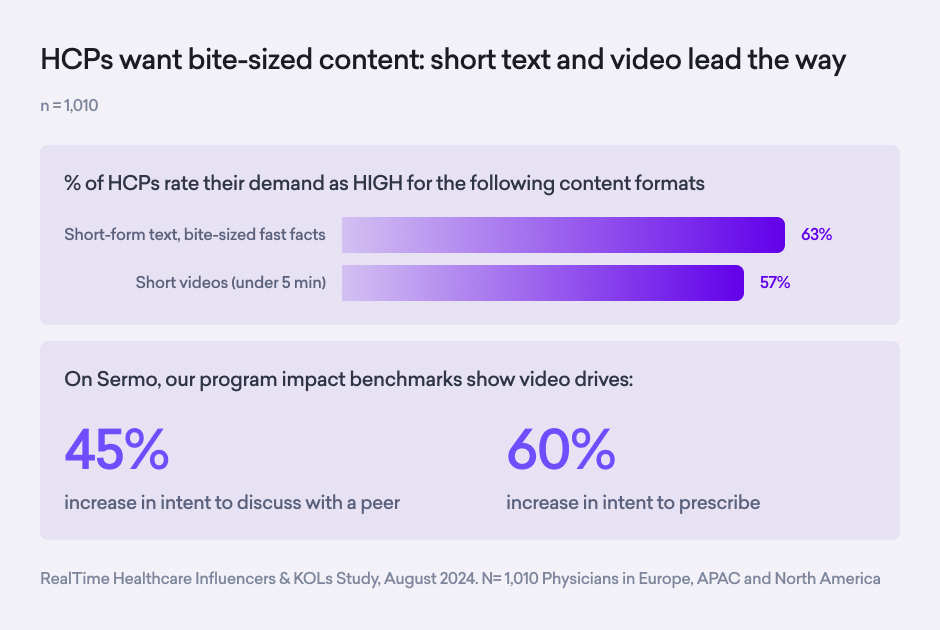
Physicians are pressed for time. Bite-sized, impactful formats capture attention while offering pathways to deeper content.
- Communicating early & often
Successful collaborations with opinion leaders start with clear, proactive communication. Engaging internal stakeholders early in program development helps ensure everyone understands the compliance guardrails and expectations. By prioritizing transparency and establishing robust pre-approval processes, both brands and creators are protected, laying the foundation for effective, trustworthy partnerships. - Meeting physicians where they are
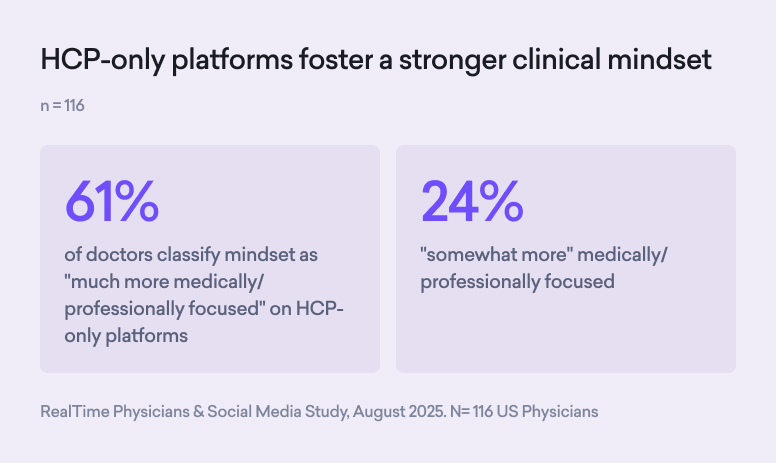
Put your messaging where it will resonate. With 85% of physicians reporting a more medically and professionally focused mindset on HCP-only platforms, aligning content with the right context ensures relevance and impact.
- Working with trusted partners
The good news is you don’t need to have all the answers or know exactly how to activate an opinion leader on your own. The right partners can take on much of that heavy lifting! When choosing a partner, look for those with deep experience in building compliant programs and the agility to adapt quickly as regulations evolve.
The future of physician influence
This shift is bigger than a fleeting marketing trend — it’s a structural transformation in how healthcare information is communicated. Physicians are not just practitioners active just in the exam room anymore; they are creators, educators, and community-builders reaching global audiences.
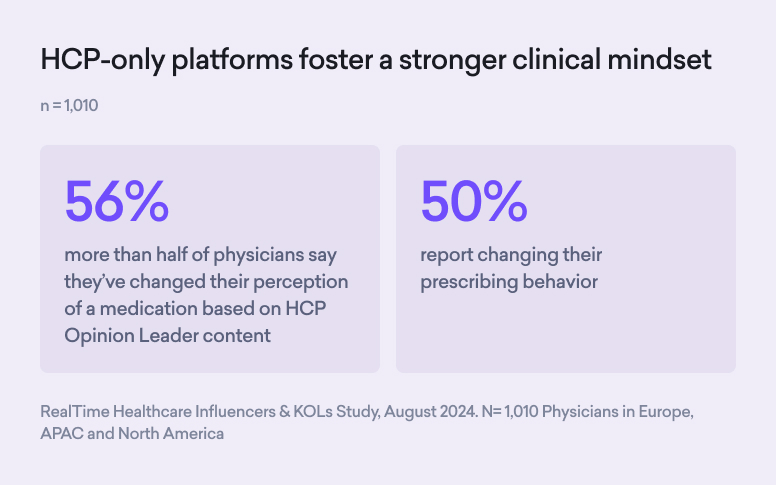
The results are tangible. More than half of physicians (56%) say they’ve changed their perception of a medication based on HCP Opinion Leader content, and 50% report changing their prescribing behavior.
At Sermo, we believe physician voices aren’t just trusted — they’re transformative. They are the bridge between science and the front lines of care, a steady guide through regulatory shifts, AI disruption, and evolving patient expectations.
The industry will continue to change. But peer-to-peer physician influence will remain the most credible and impactful force in healthcare.
This is the future of physician voices. And it’s a future Sermo is proud to help shape.
At Sermo, we turn physician experience, expertise, and observations into actionable insights for the global healthcare community. Engaging with more than 1 million HCPs across 150 countries, we provide physicians with a social platform that fosters impactful peer-to-peer collaboration & discussions about issues that are important to them and their patients. Sermo offers on-demand access to physicians via a suite of proprietary technology to provide business intelligence that benefits pharmaceutical, healthcare partners and the medical community at large.
Interested in learning more? Please visit us at sermo.com/business and follow us on Facebook, Twitter and LinkedIn for the latest and greatest in healthcare insights.